
One of the many goals for our little homestead is to create and sell pottery, and so we’ve embarked upon building out a home studio!
One of our outbuildings is 1.5 floors with a small guest apartment on half of the second floor. The bottom floor is a large garage type space and houses our well pump, home water filter and pressure tank, a water heater for the guest apartment, and at the time, spiders, mice, birds, dust and debris. With access to running water and power, this space is ideal for a pottery studio, but it would need a lot of work to be a functional, comfortable and inspiring space to create.
The first few steps we took to setting up the studio were:
- Cleared out the items we’d stored there, as well as all the detritus.
- Vacuumed out all the spider webs, dirt and leaf accumulation.
- Installed shelving, picked up my wheel and started bringing in some books, art and tools.
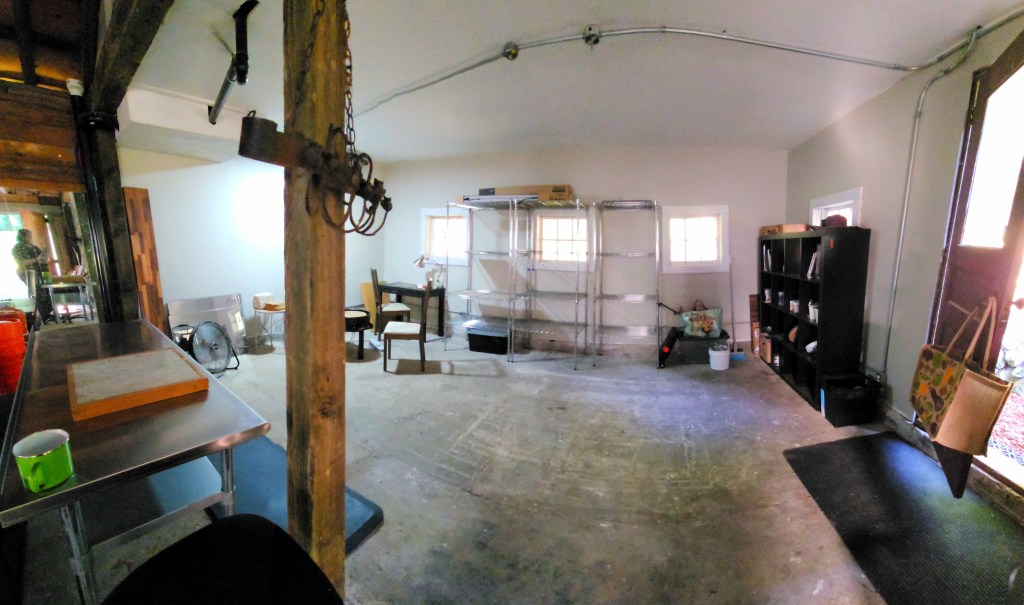
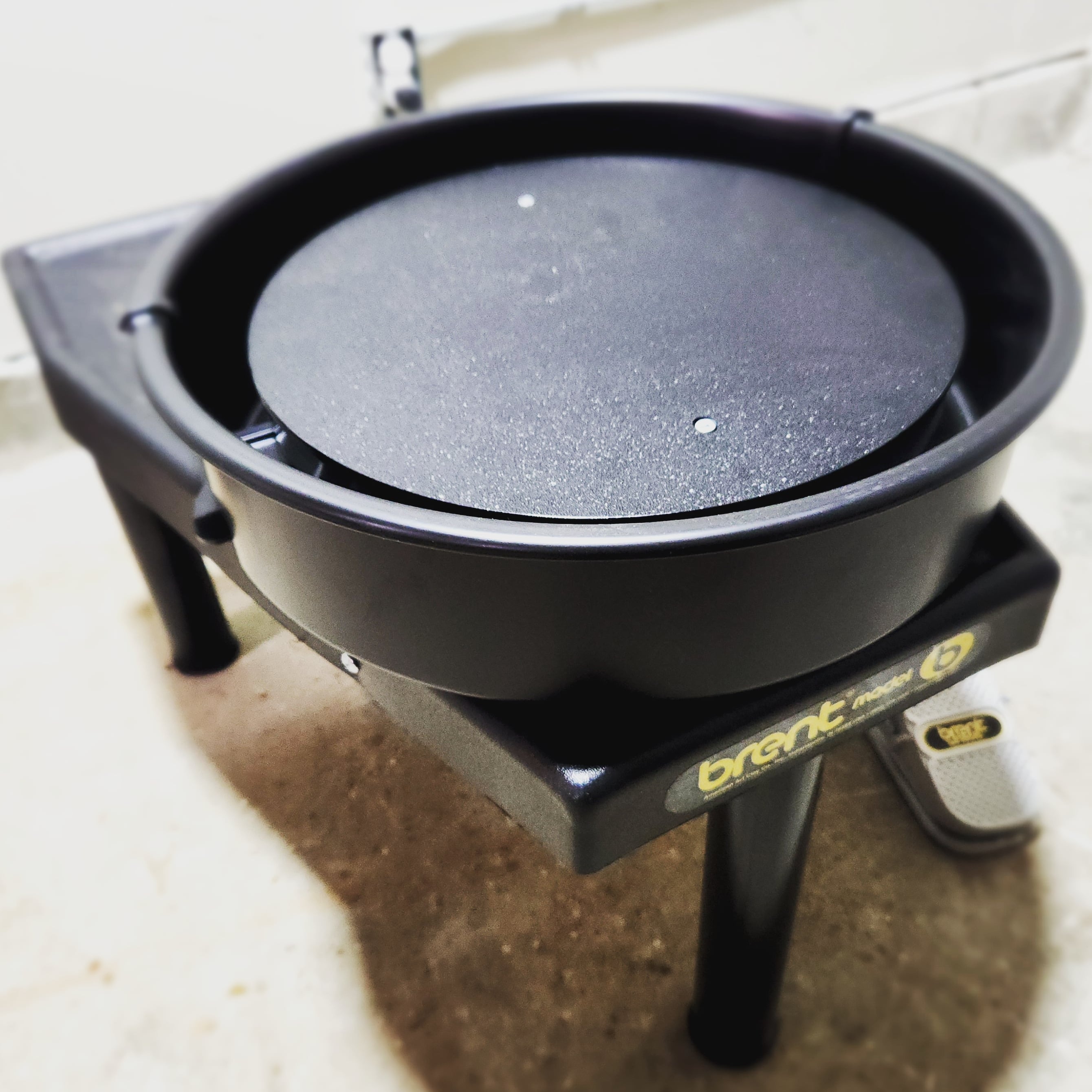
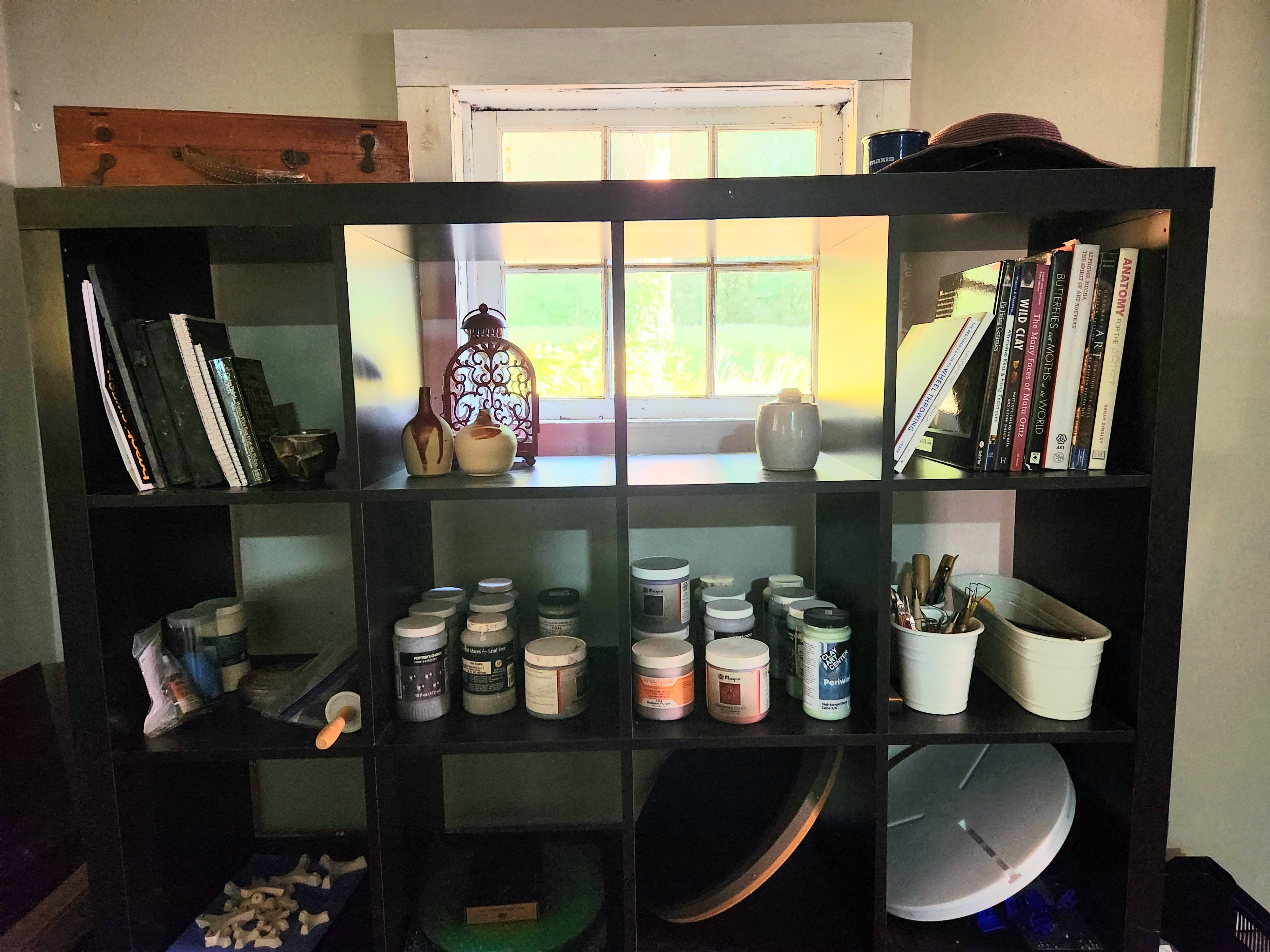
We then checked a couple of BIG projects off the list:
- We hired contractors to put a new roof on the structure, so we could be confident that our investment would be protected.
- We also hired contractors to install closed cell foam insulation on the ceiling and gables.
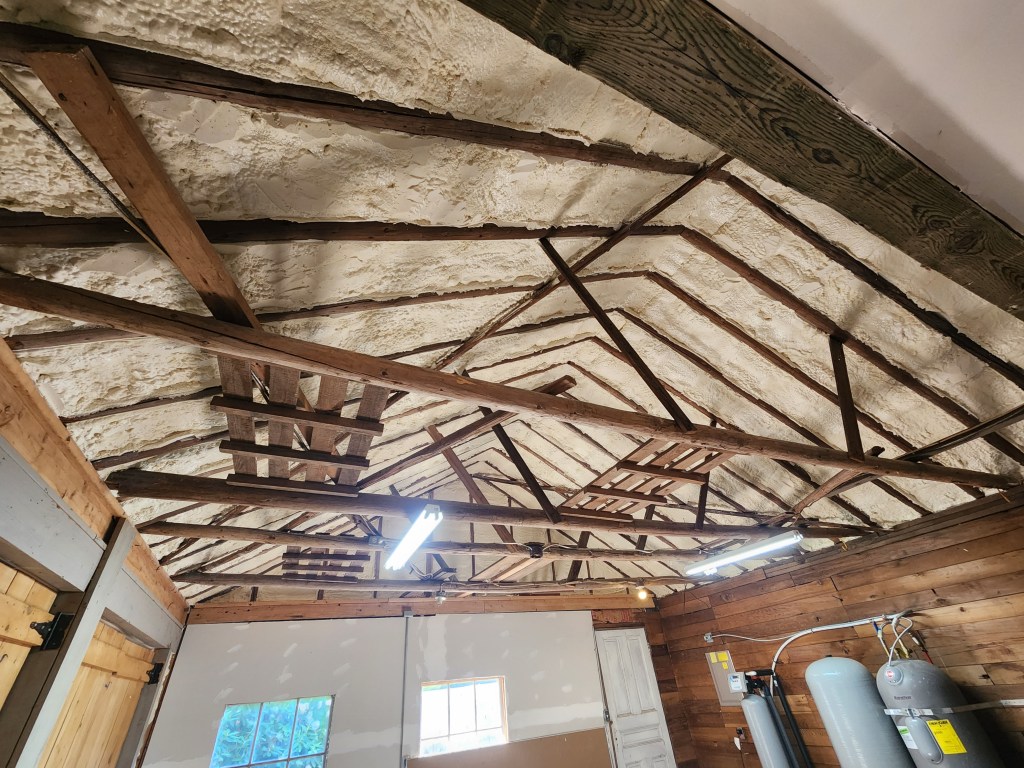
We then started tackling the DIY projects!
There are a two key things that are important to me in my studio set up:
- Environmentally friendly
- Ergonomic
I am not starting out young, and I’ve spent a lot of years sitting at a desk or in a car commuting, and unfortunately, I have a lot of nerve damage, so I need to ensure that whether I’m working at the wheel, at a table wedging clay or washing out my equipment in the sink that I don’t aggravate or worsen my nerve pain.
We ordered a large stainless steel commercial kitchen sink and faucet. The sink itself is quite large, but the legs were very short. We picked up steel pipe and cut custom legs to put the sink at a height where I can wash out my equipment without any bending forward! This does mean that I’ll likely need a step stool for anyone not my height to work at the sink. I look forward to that day!
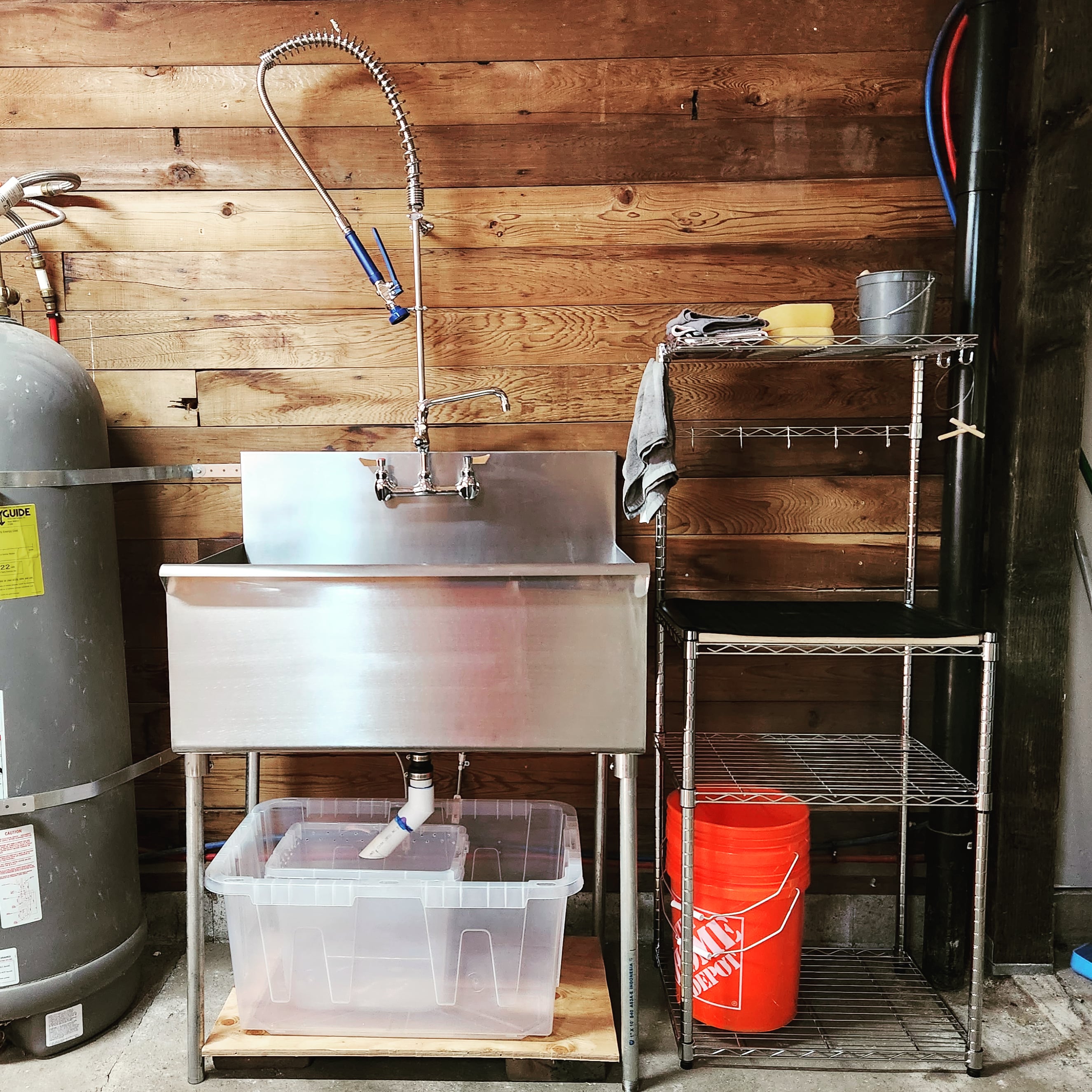
We’ll be reclaiming the waste water from the sink for use in non-edible garden irrigation. The clay trap below the sink will allow me to capture and reuse clay. Glaze will be captured in separate buckets and ideally repurposed or taken to hazardous waste facilities.
Stay tuned for details:
- Building a Custom Work Table – suitable for sitting and standing
- Installing Beadboard Ceiling Panels
- Installing LED Light Fixtures
- Installing an energy efficient Heat Pump
- Setting up a glaze station
- Installing a Kiln
- Replacing the windows and doors
- Painting, decorating and finishing
 Leaping Rabbit