
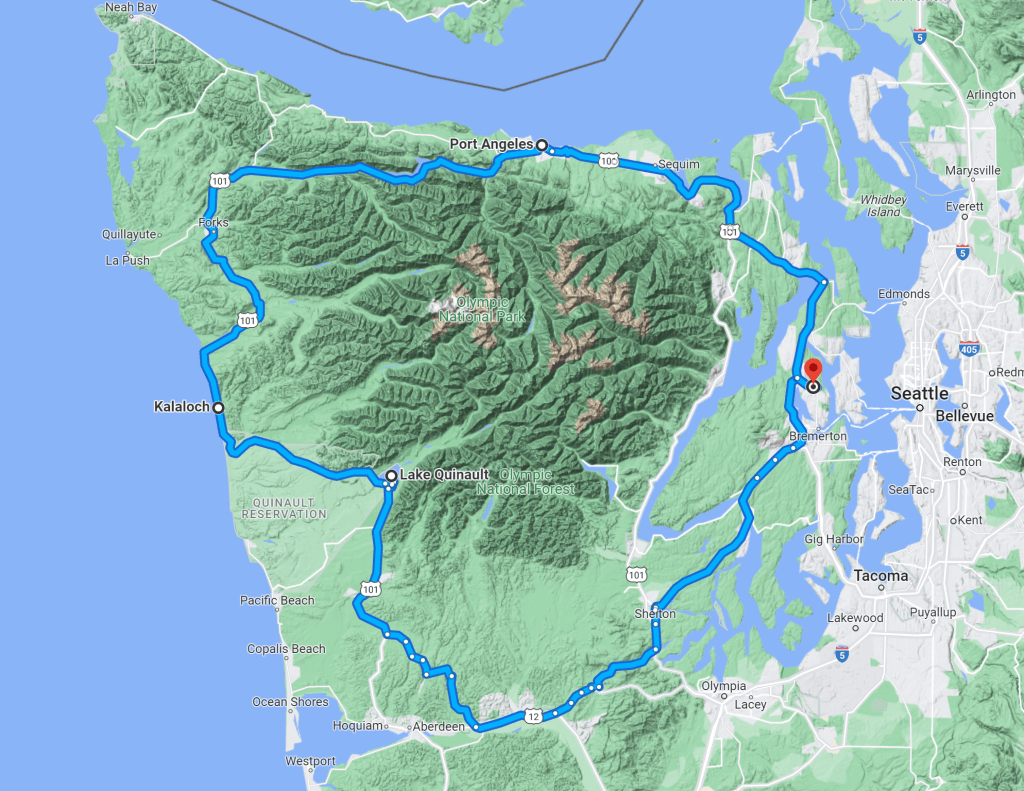
In April of 2023 we took our first trip to the Olympic National Park, where we stayed at the Lake Quinault Lodge for two nights. We then took the “scenic route” back, stopping off in Kalaloch, venturing up to Port Angeles for dinner, and passing Crescent Lake before heading home.
It was early enough in the season that the trails weren’t crowded and the weather was our ideal: cool and a bit damp. The only downsides to visiting so early in the season were that the Ranger Stations were closed and many of the roads hadn’t yet been cleared, so we weren’t able to access all of the places in the park that we had hoped to. Just something to consider when planning your trip. It was well worth it, though, to be nearly alone on the trails.
We had a few goals for this trip, which helped to inform our itinerary:
- Visit one of the Rainforests – Hoh, Quinault, Queets or Bogchiel
- Visit at least one ocean side beach
- Do some hiking, see some waterfalls
- Have a hot meal and a warm bed near a fireplace at the end of each day
The total of our traveled route for the weekend
We chose to stay at Lake Quinault Lodge as it offered a lovely place to rest, lots of nearby hiking, a few nearby dining options and was close enough to the ocean that we could squeeze a trip to the beach into our weekend.
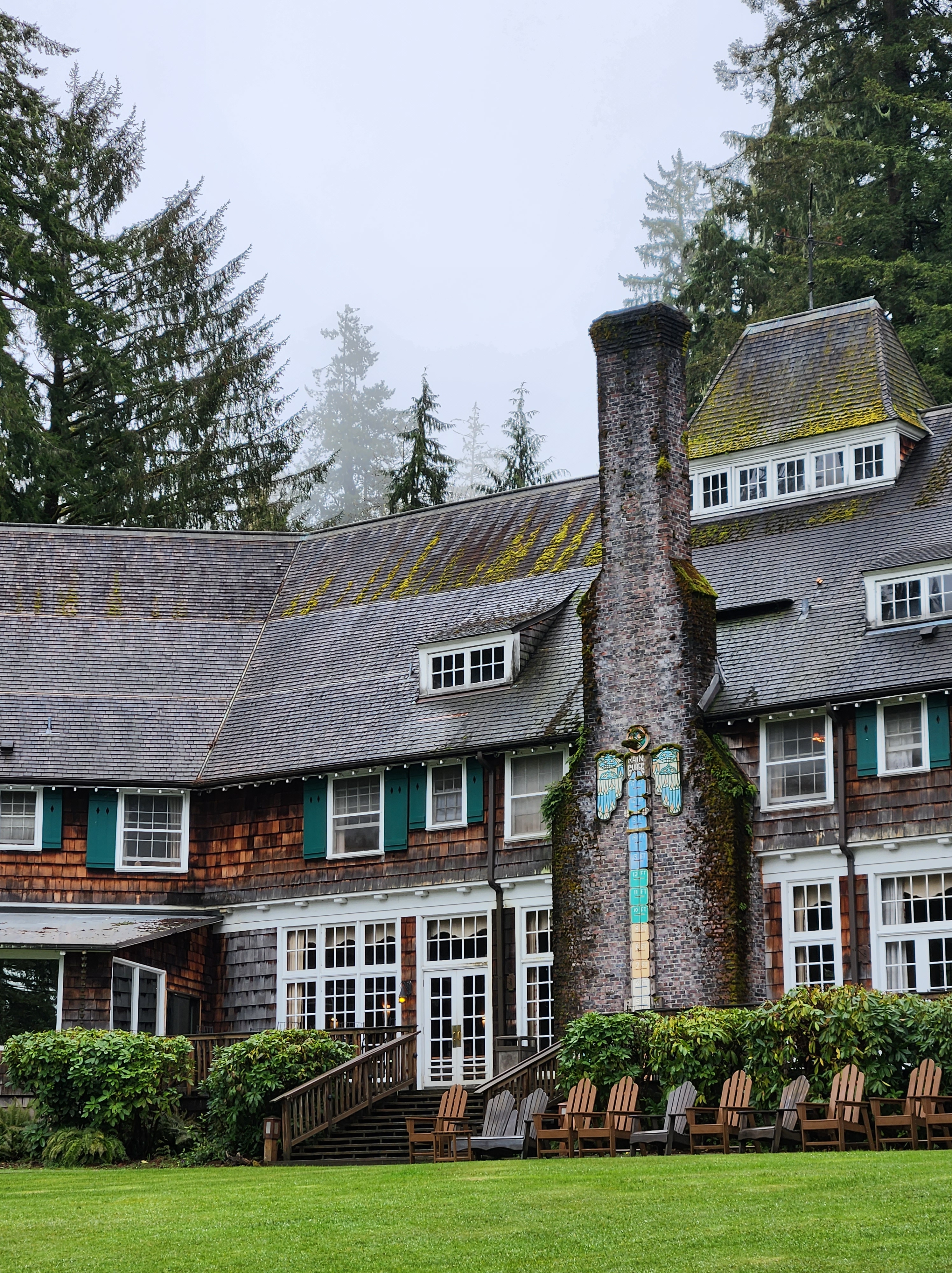
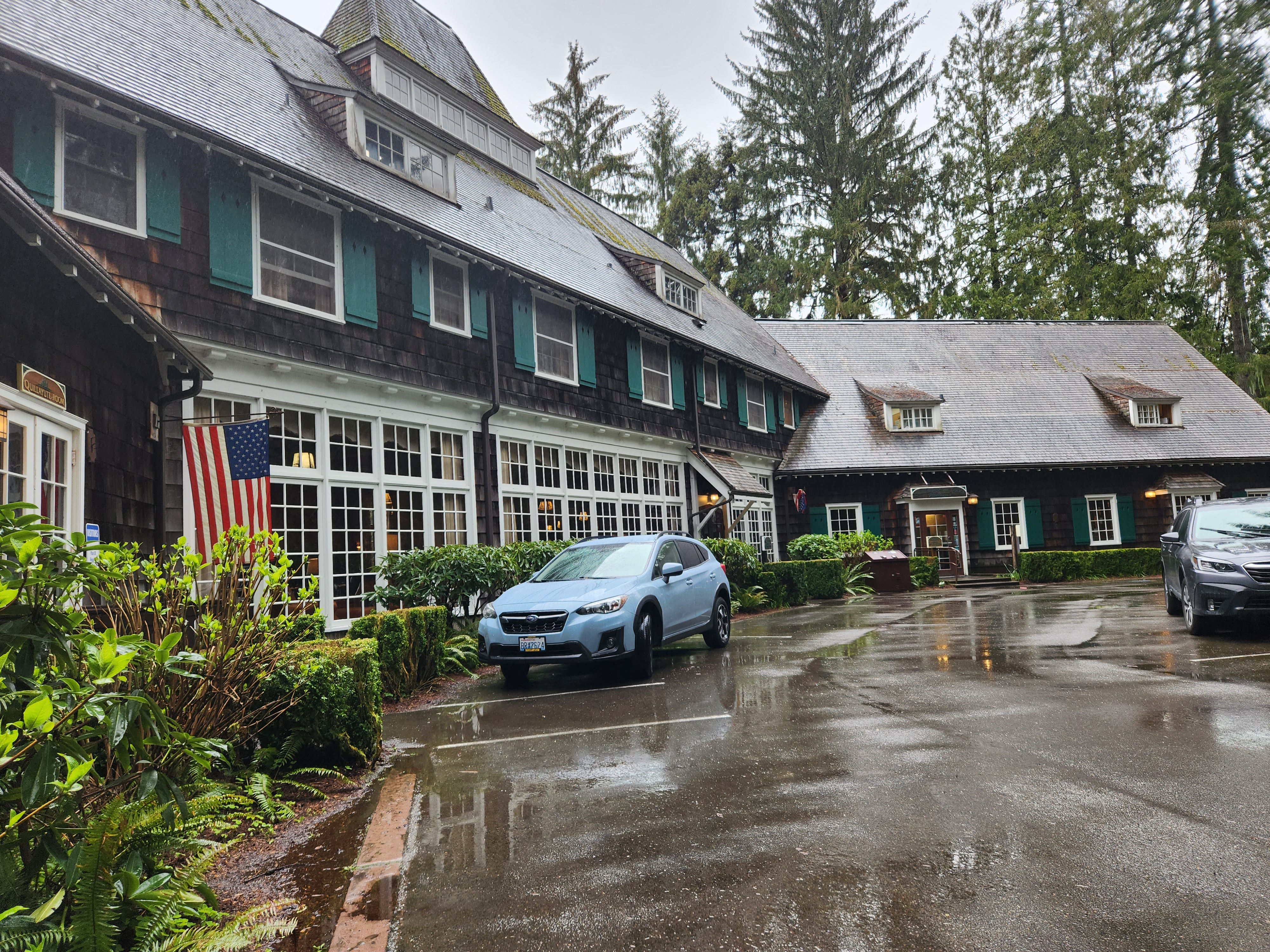
The US Forest Service website describes the lodge as “A grand and rustic lodge built in 1926 in the heart of the Quinault Rain Forest among ancient Sitka spruce, Douglas fir, western red cedar, and western hemlocks, on the south shore of Lake Quinault. The two-story historic lodge was built in the mid-20s and has welcomed thousands of visitors from all over the world”, which is a modest description.
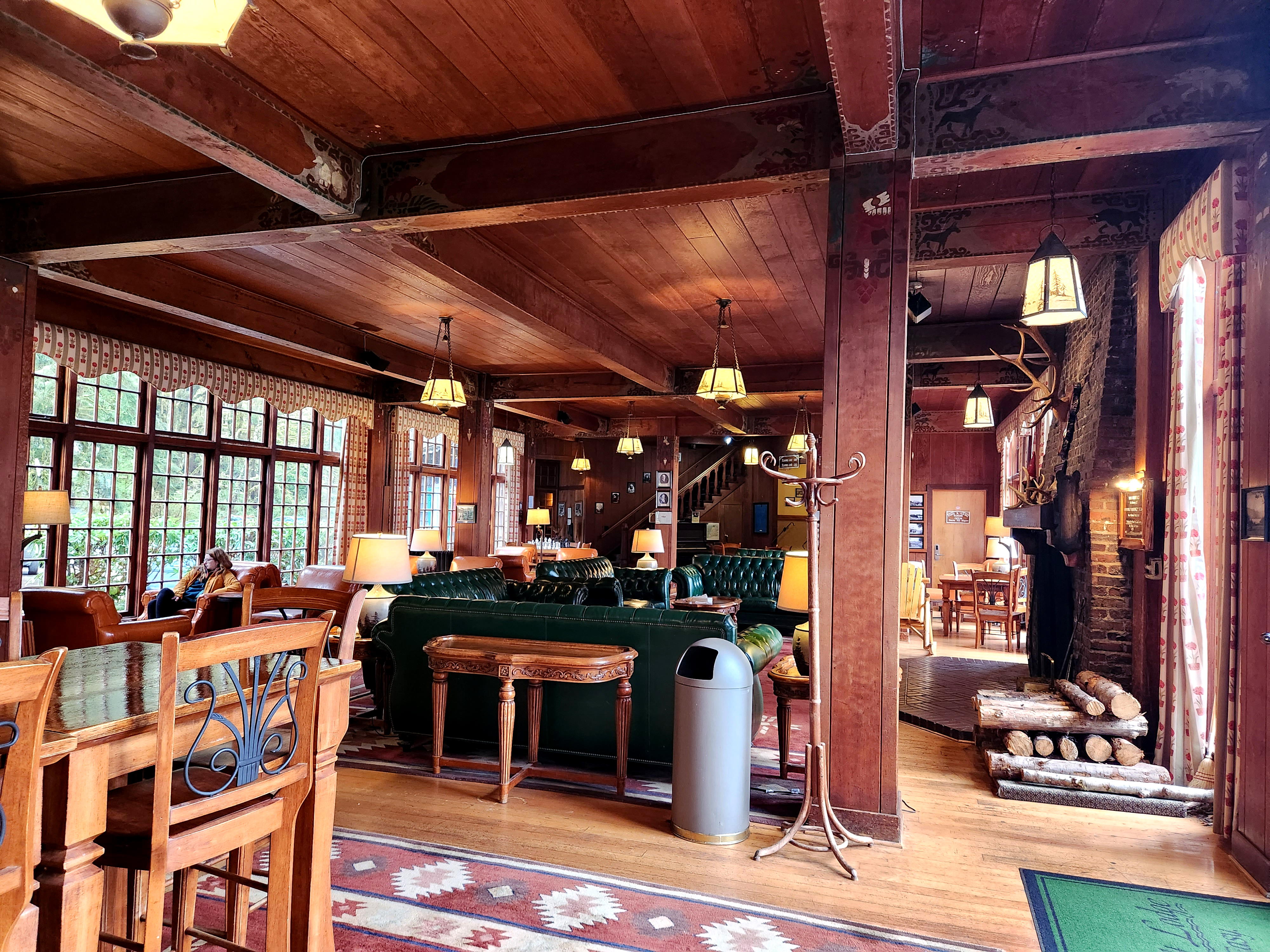
The lodge is a lovingly maintained longhouse, clad in cedar shake, festooned with paned windows and buttressed by a monumental brick chimney. The beating heart of the lodge is the massive brick fireplace, which is flanked by ceiling height windows that overlook the lawn stretching down to the lake.

You can book reservations to stay at the Lodge online or by phone at +18888963818
Be prepared to pay extra for WiFi and not to have cell service while you’re there!
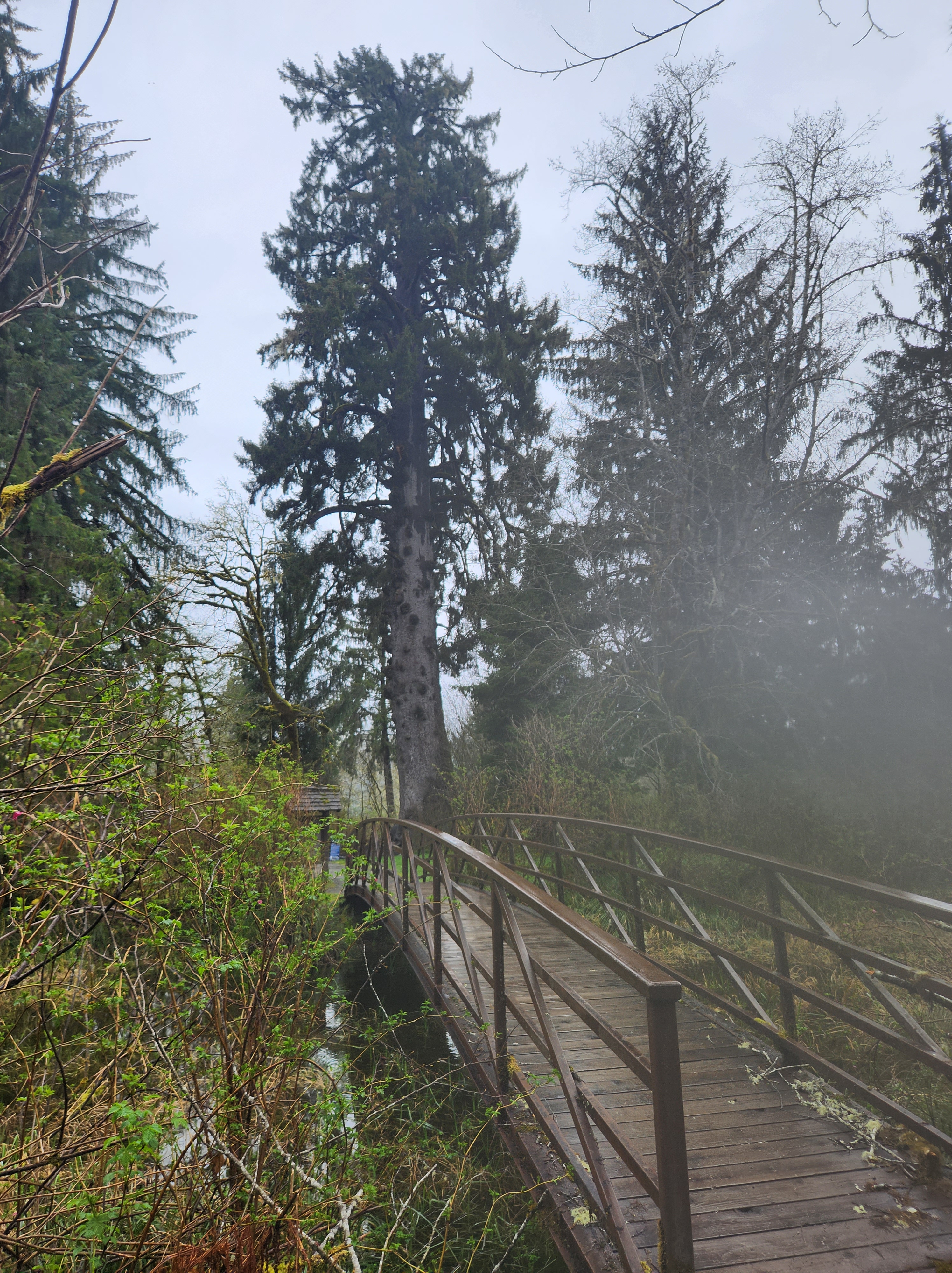
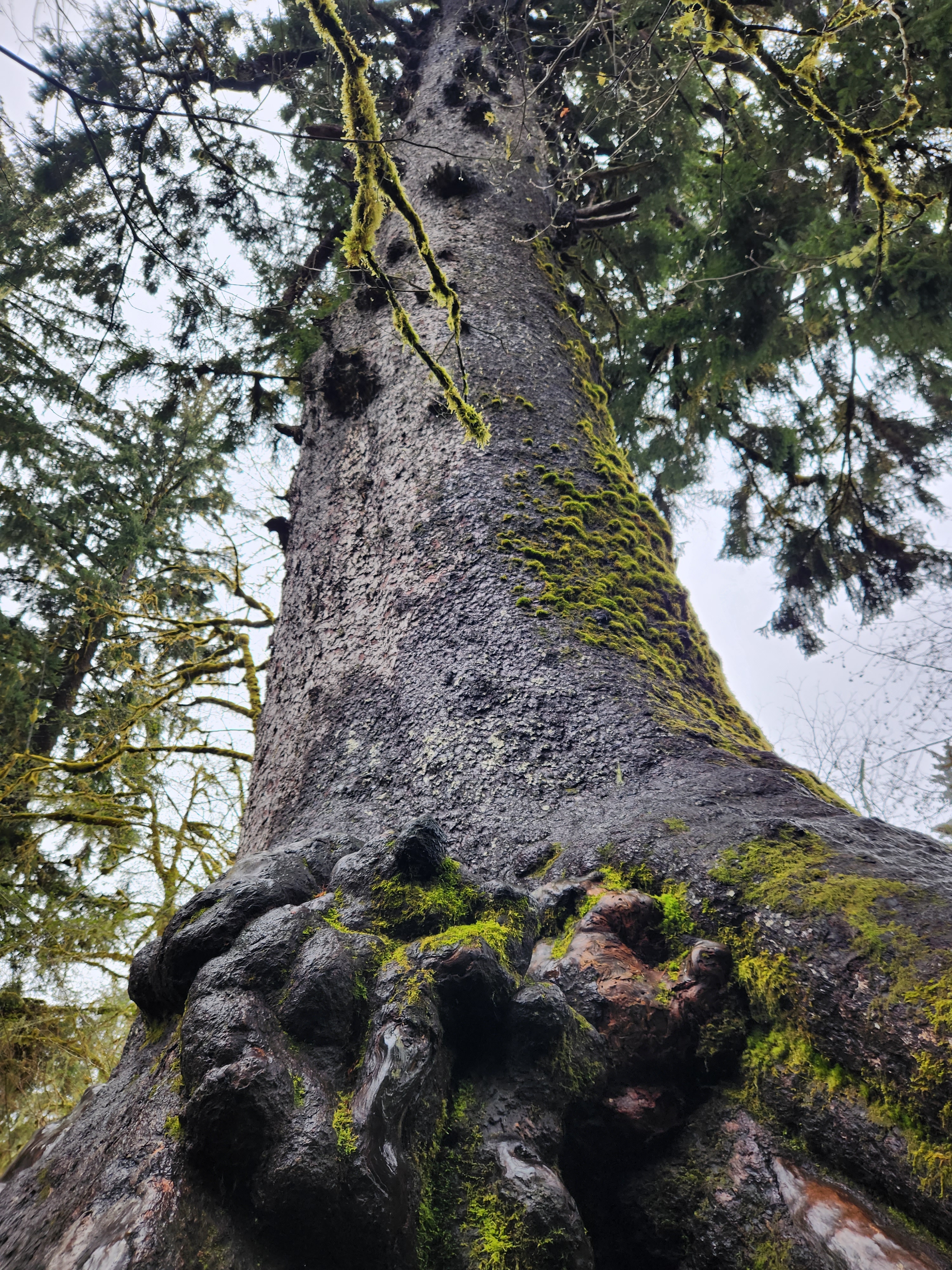
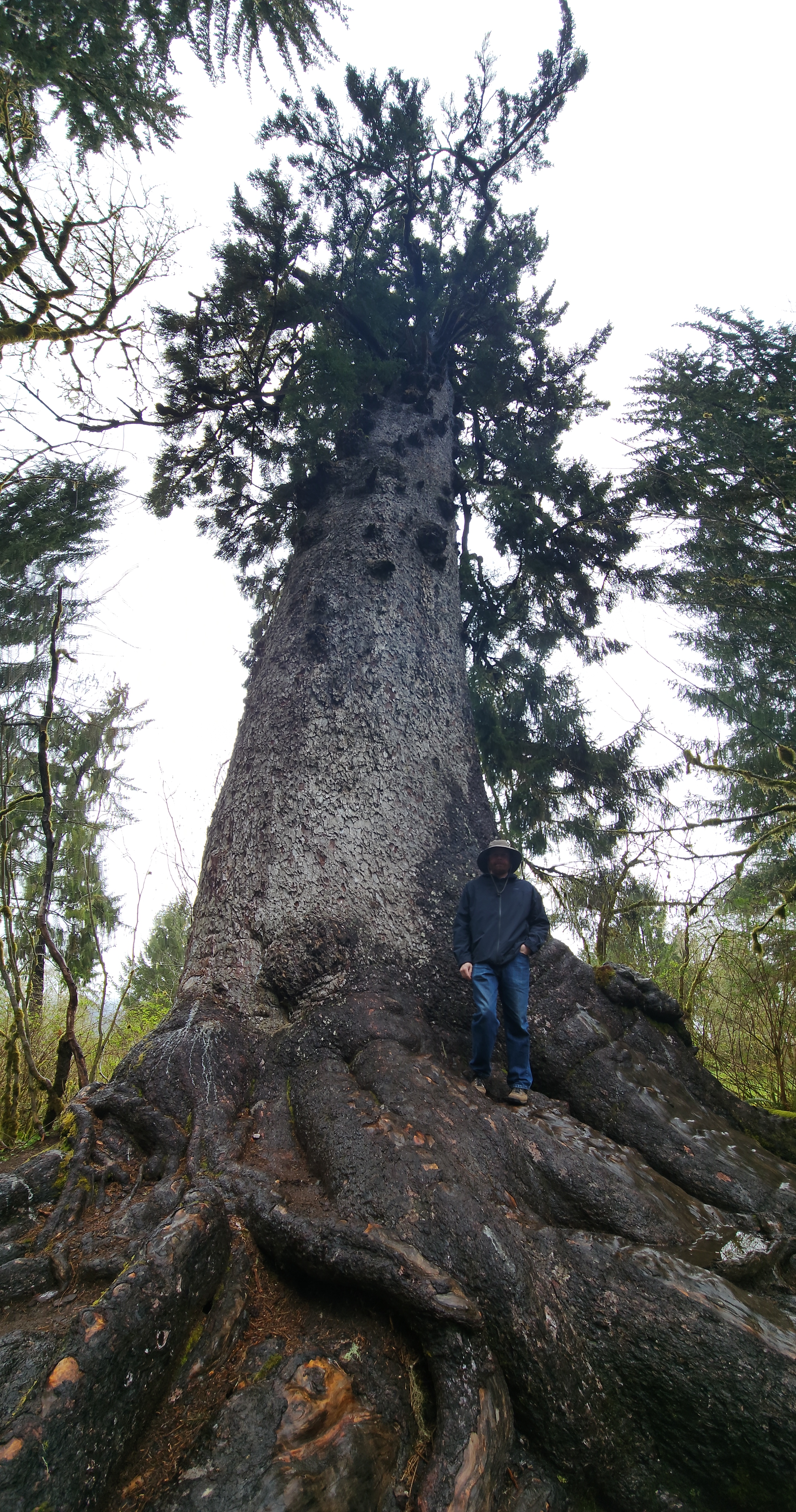
Just up the road from the Lodge is the World’s Largest Sitka Spruce. The parking is easy to miss and notable only by the Trail Sign to the right and a set a bit back. The Spruce itself is a short flat walk from the road, about 1/4 mile. It’s a pleasant walk and an impressive tree. The photos don’t do it justice!
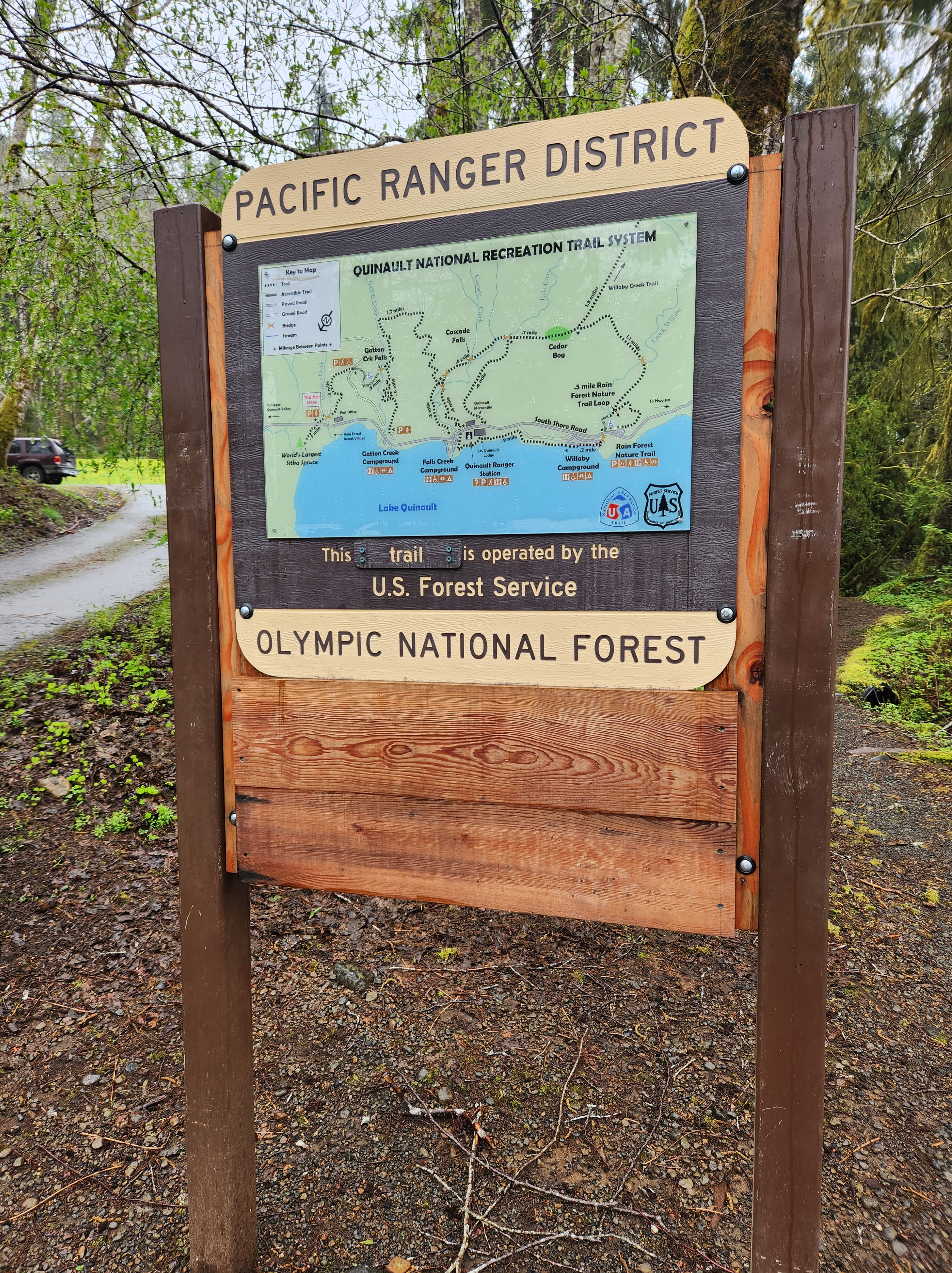

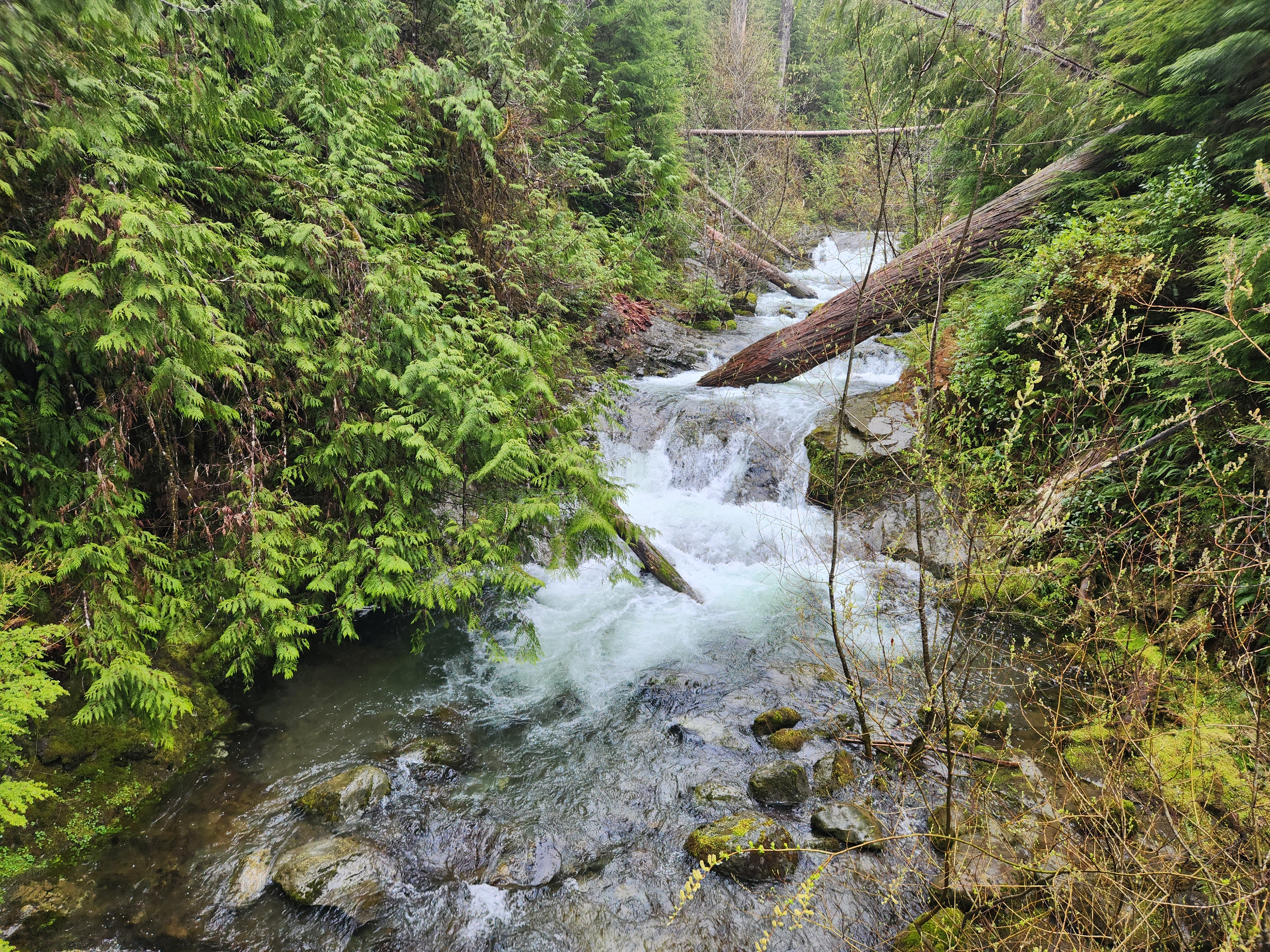
We headed back to the other side of the road, past the trail sign, and hiked the Gatton Creek Falls loop. The hike was uphill, but not too strenuous for me with a short break here and there. I have nerve pain in my back and hips and am a larger bodied person that doesn’t do much hiking, so if you’re looking for a moderate to easy trail, this is a great one!
The falls at this time of year were astounding. I’m not eloquent enough to do them justice and the photos and video don’t quite capture the feeling of being in this space. Everything is so much larger than you think it is. What looks like a fallen log is a massive tree trunk, possibly 30 feet long or more.
The sound of the rushing water is just so… BIG. The rumble changes the rhythm of your heart and triggers your adrenal glands.
The power of the moving water is terrifying and thrilling, thunderous and breathtaking.


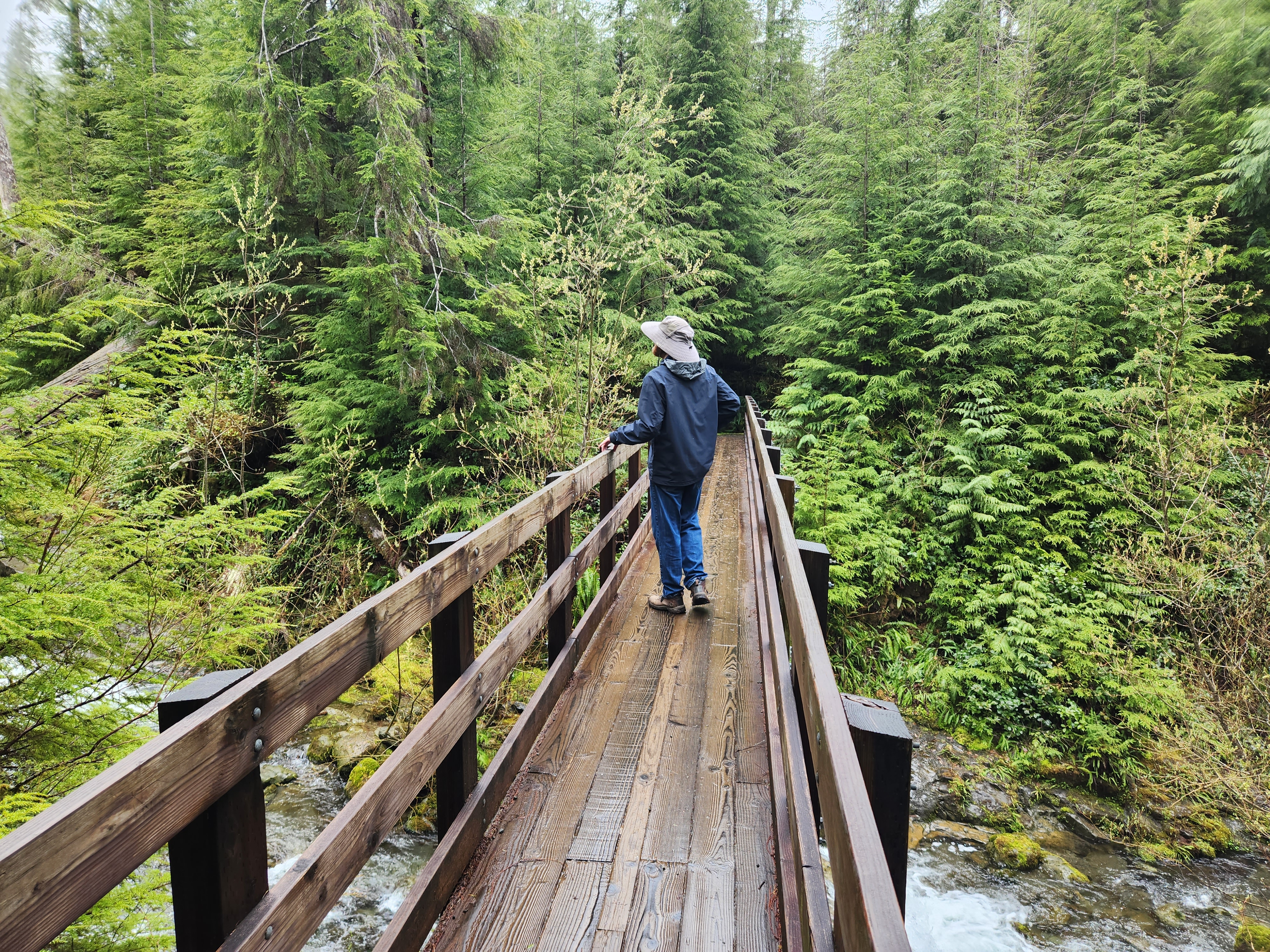
We chose the shorter route, looping back to South Shore Road just after the falls. We warmed up with beverages and a lovely dinner at The Salmon House Restaurant – a cozy spot with a large warming fireplace, friendly staff, tasty food, stiff drinks and a fantastic view of the lake.
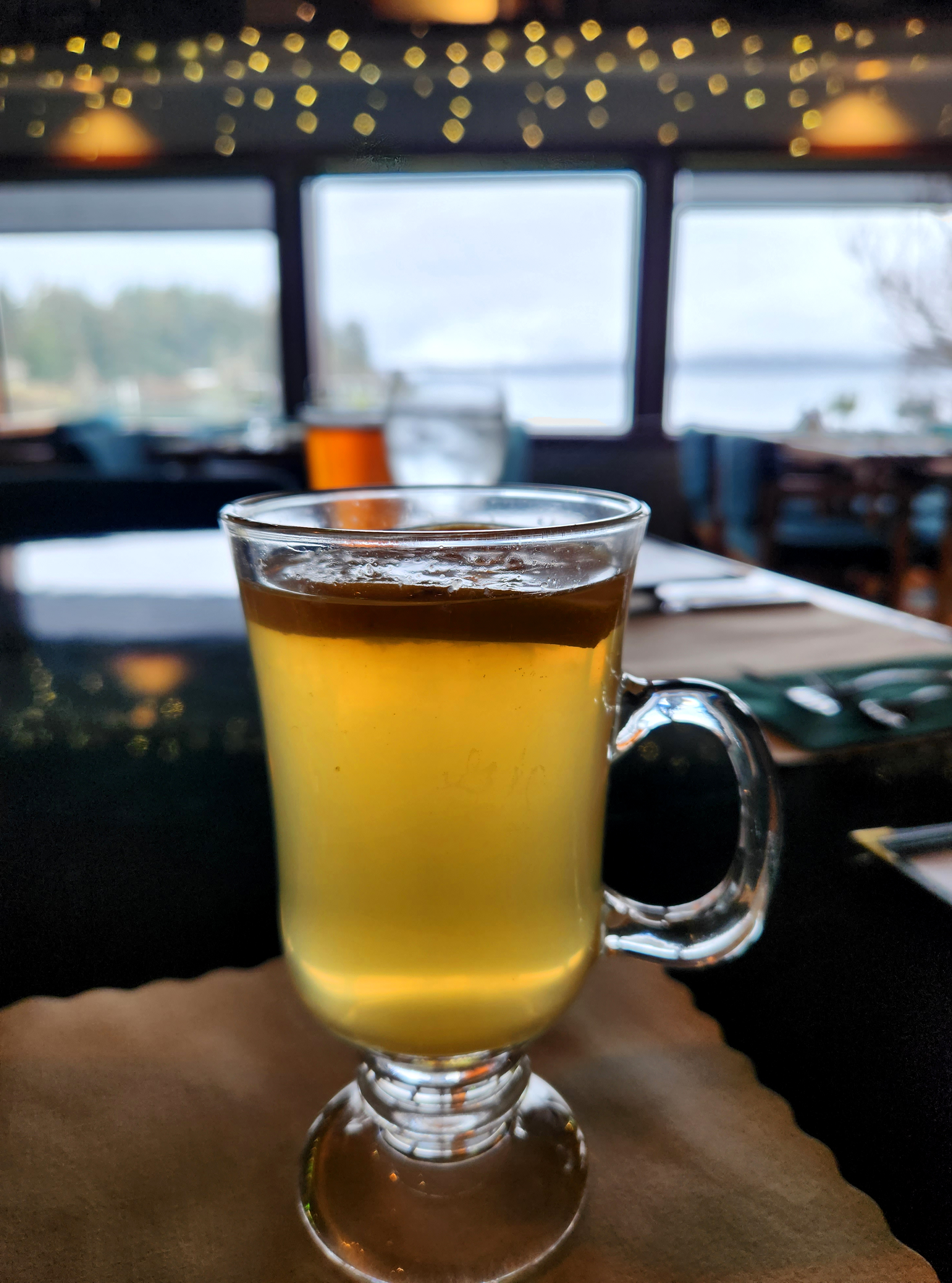
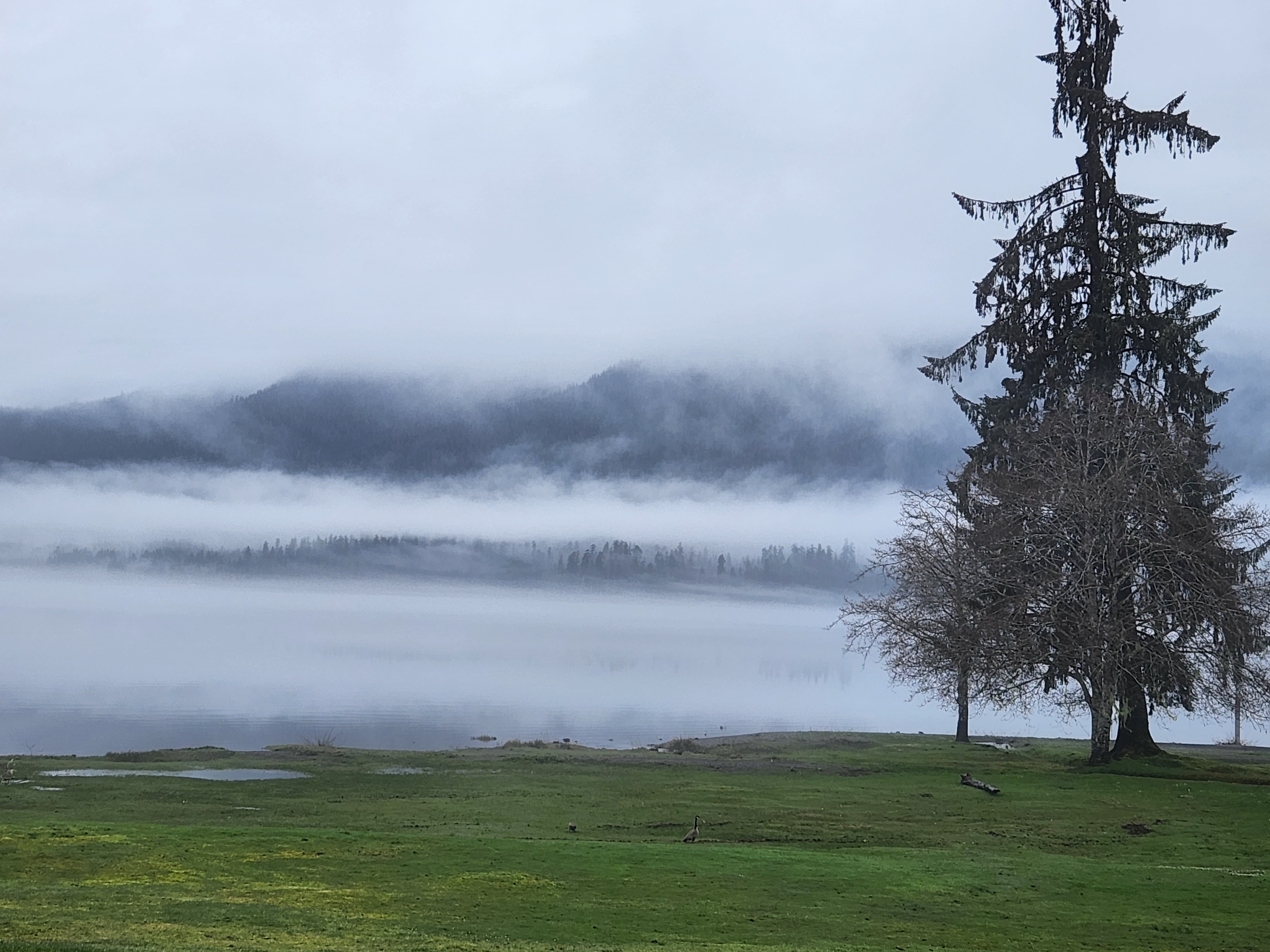
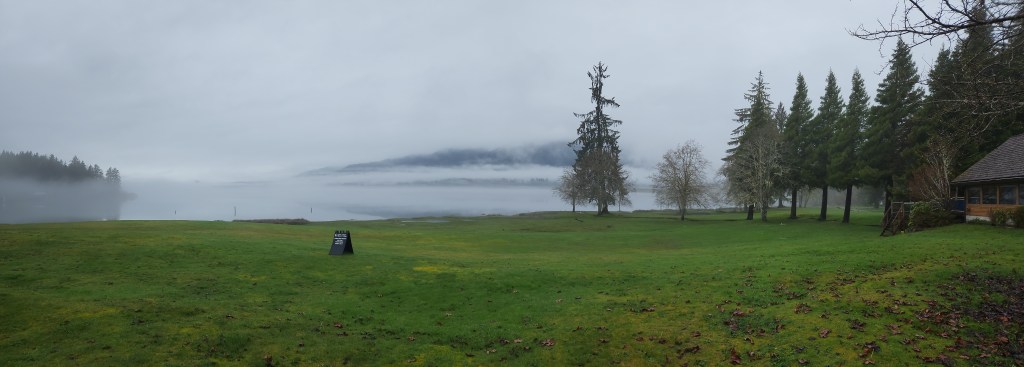
We cozied in for the night at the lodge, awoke bright and early and headed down to the Roosevelt Room to grab hot beverages before a morning hike along the lake. The route was not especially hilly, but was a bit traitorous, punctuated by tree roots and rocks. We took our time, so as not to twist an ankle, and hiked about 40 mins in one direction before heading back.

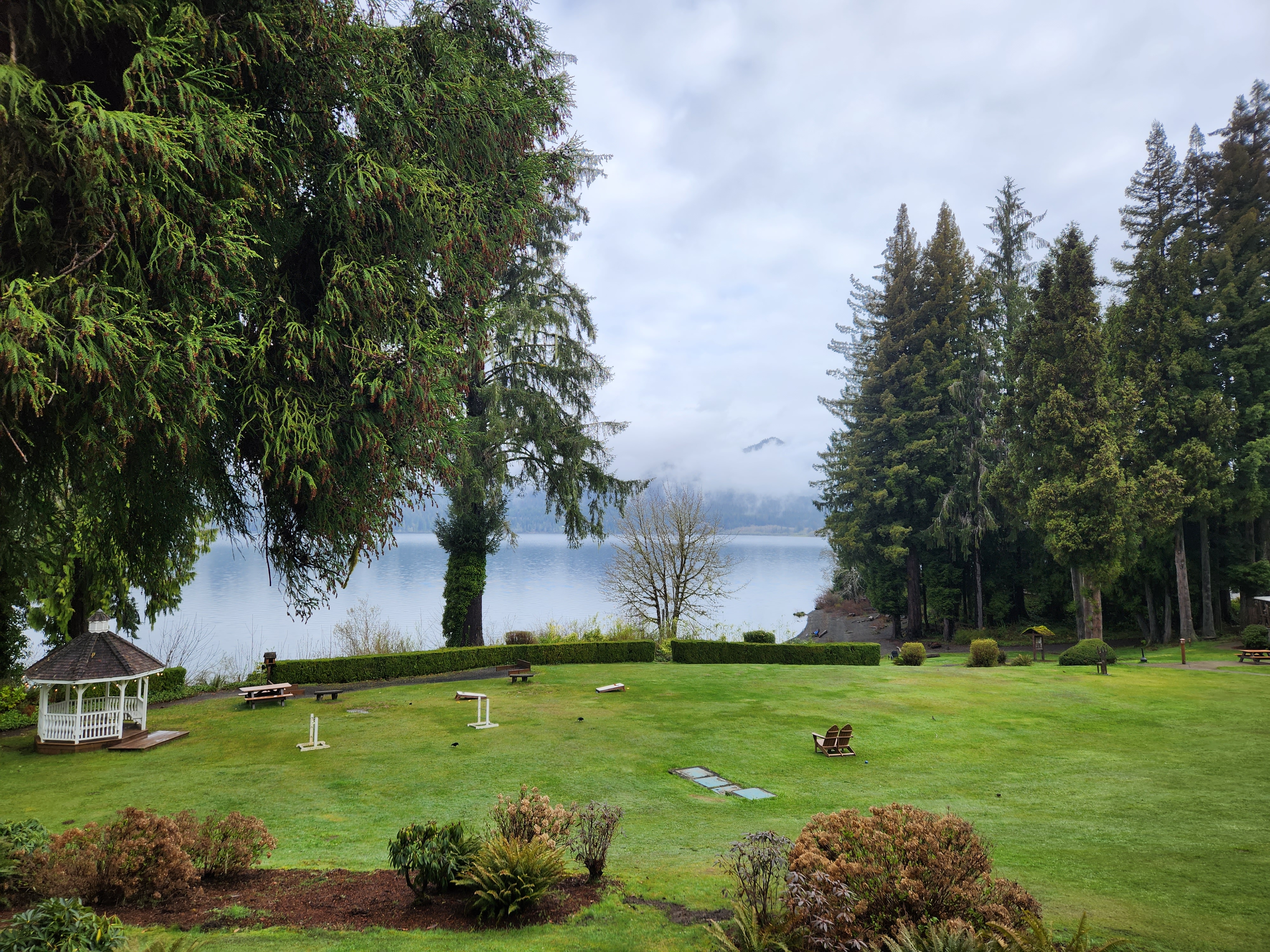
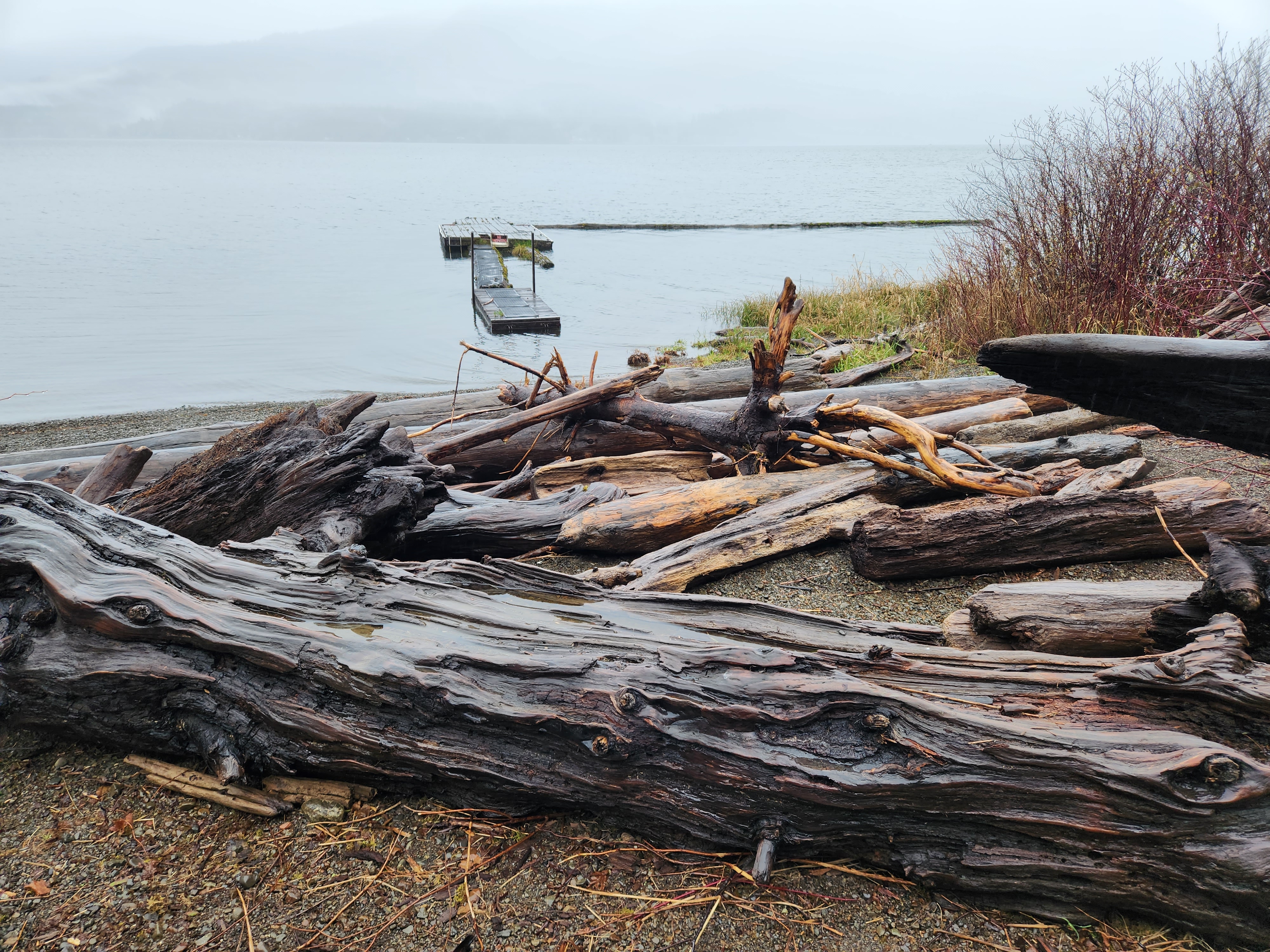

We then tucked in to breakfast at the lodge. The food was good and our server was very friendly. We sat near a wall of windows on what appeared to be an enclosed porch area with sweeping lake views.
After breakfast, we headed to the North Shore to do some more hiking. We stopped at the Ranger Station station, which was closed, but had open bathrooms. The trails at the Ranger Station that we chose to hike were Maple Glade and Kestner Homestead.
This hike was possibly my favorite part of the trip. The soft rain dappled the water which pooled around tree roots and behind beaver dams. It evoked the feeling of being in an alien landscape, but without any sense of foreboding. At every turn we spotted a forest spirit in the form of moss collected on a tree or fallen branch peaking up through the water.

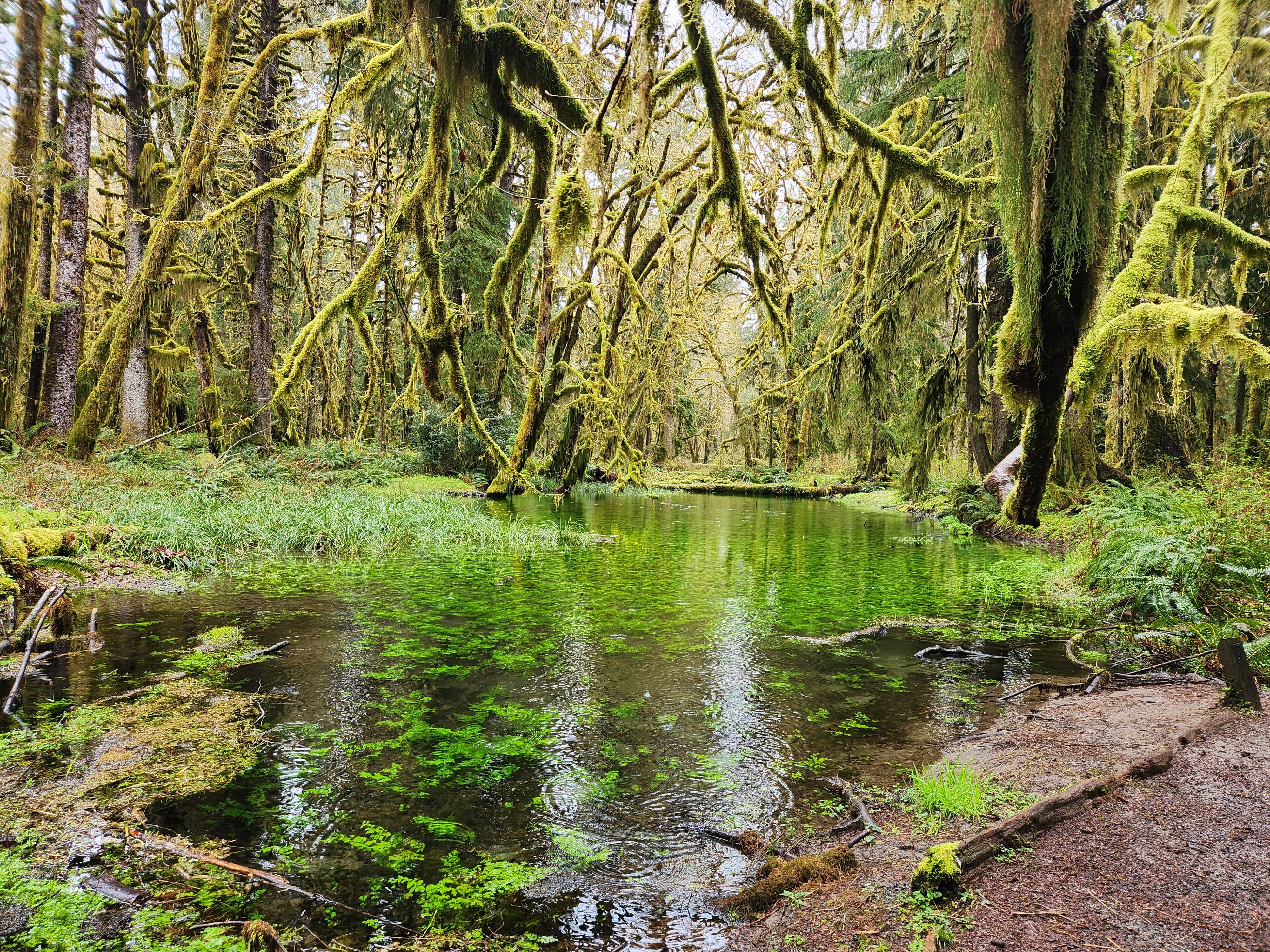

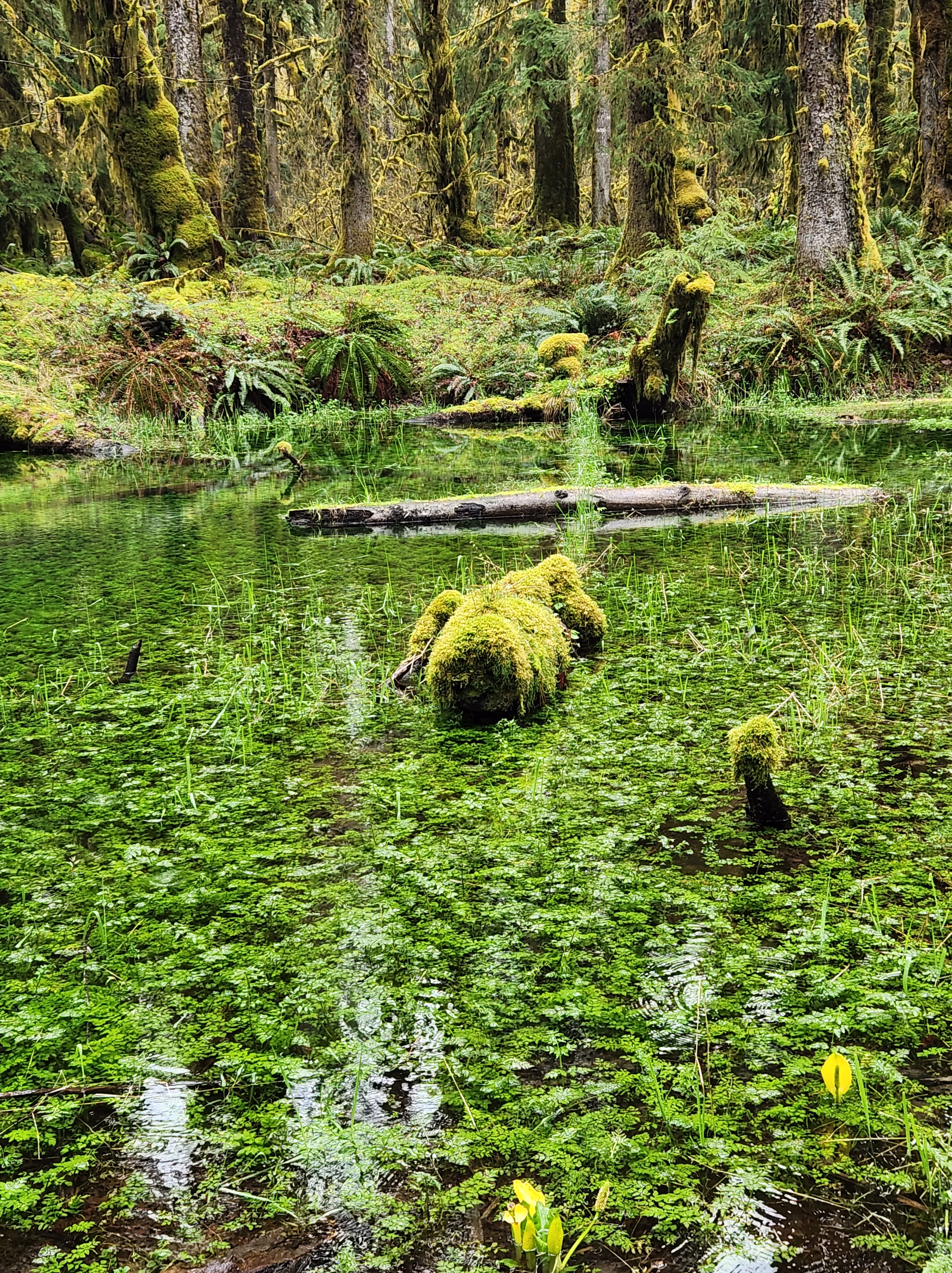

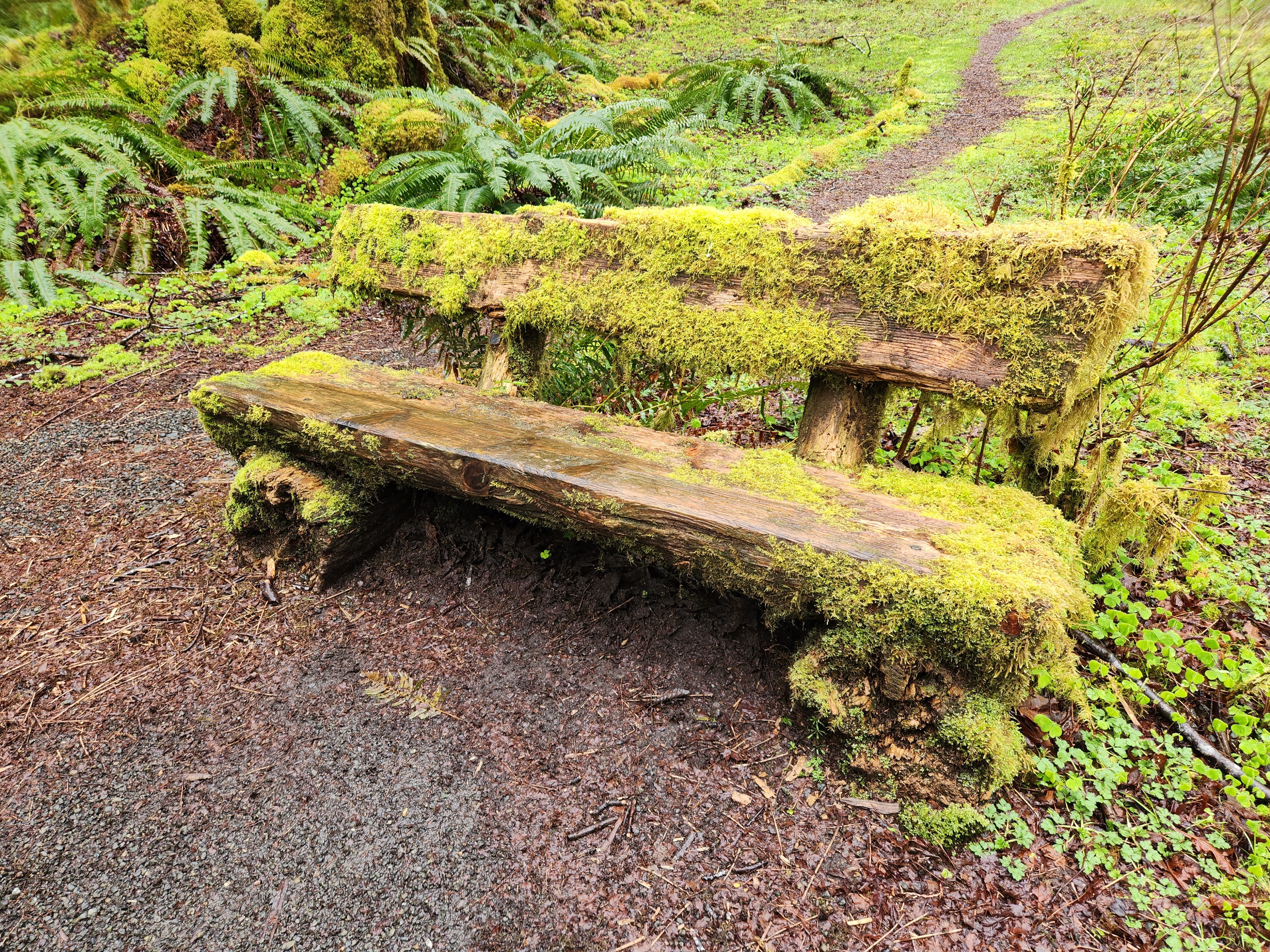
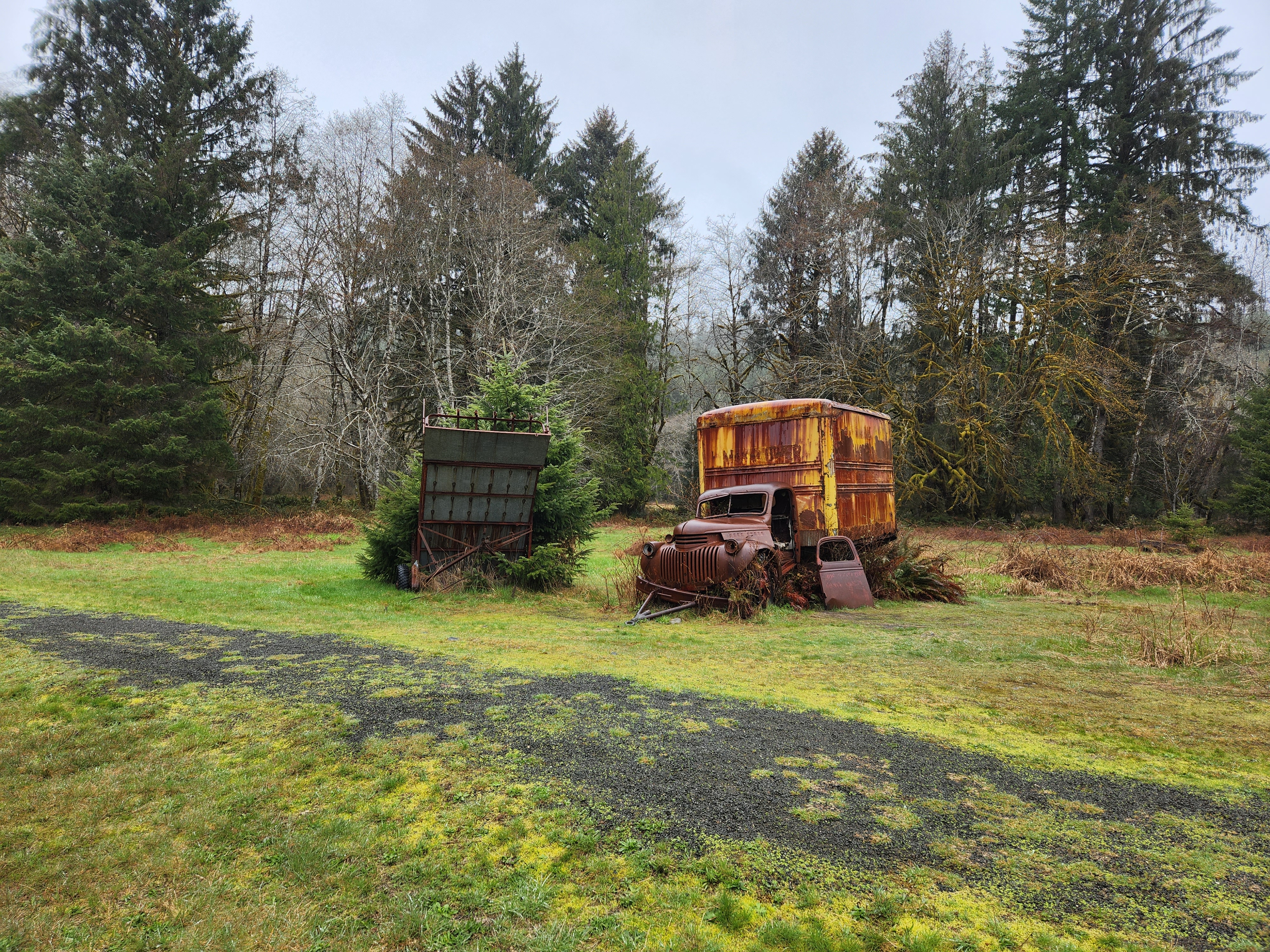
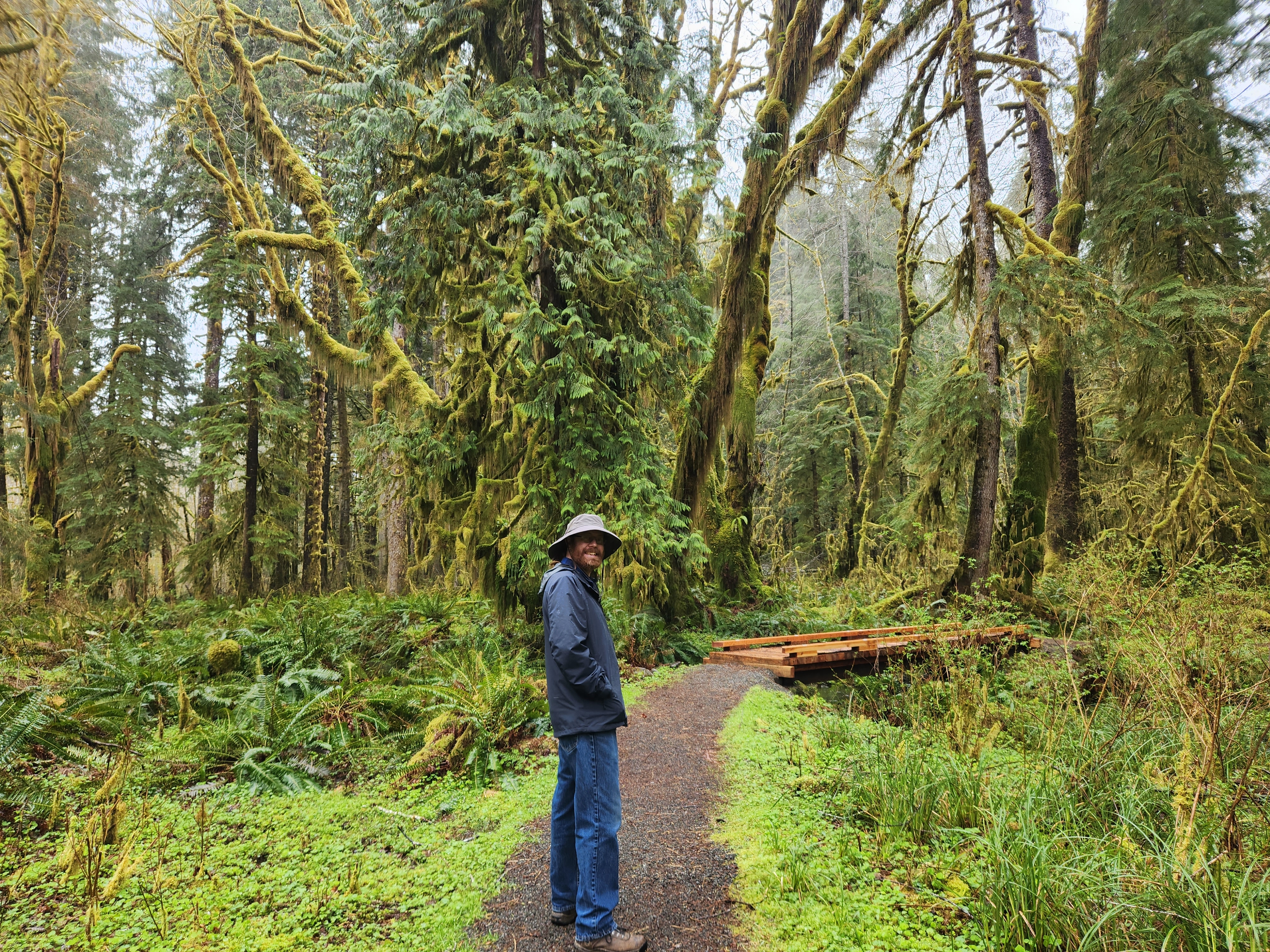
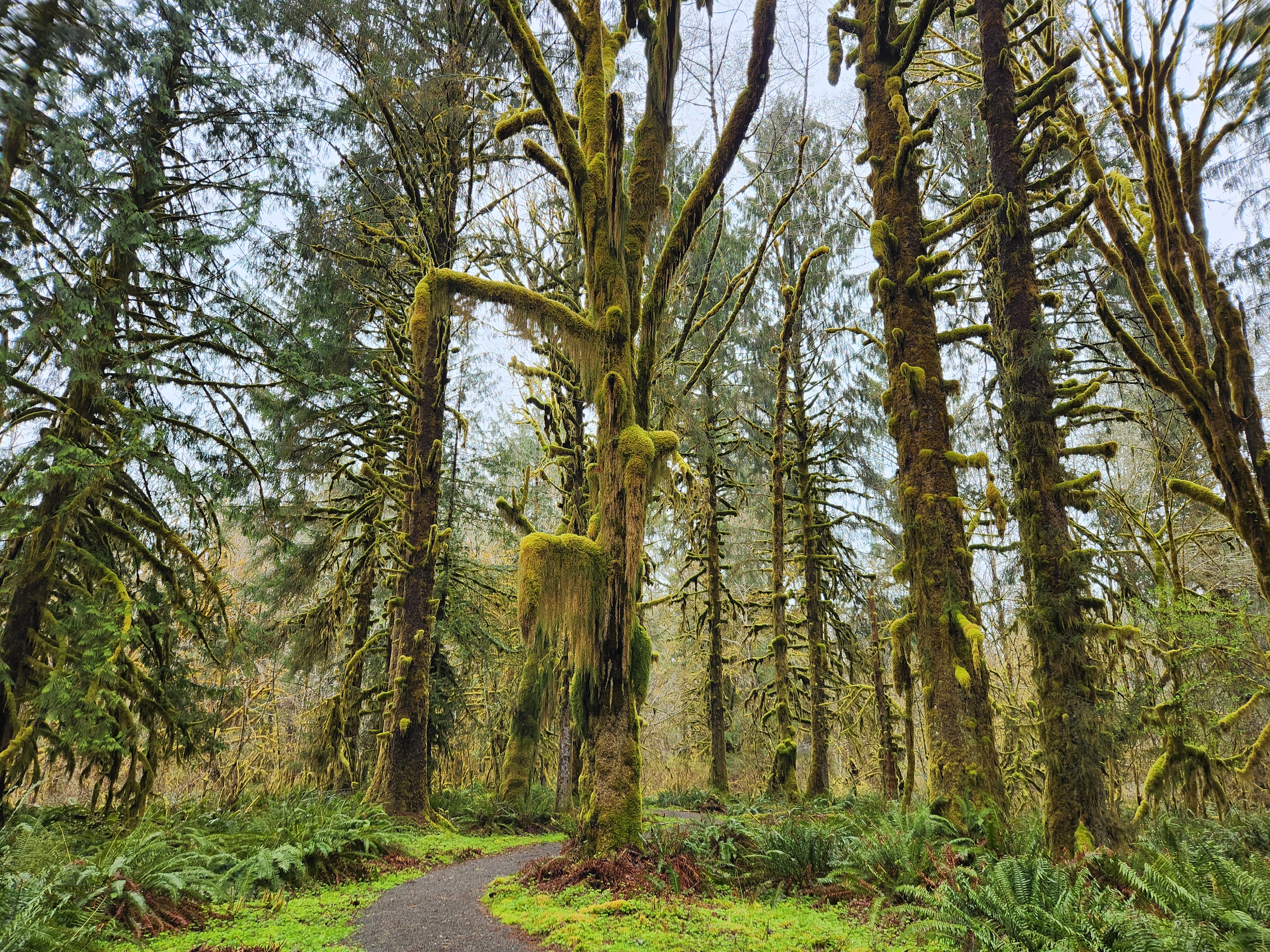

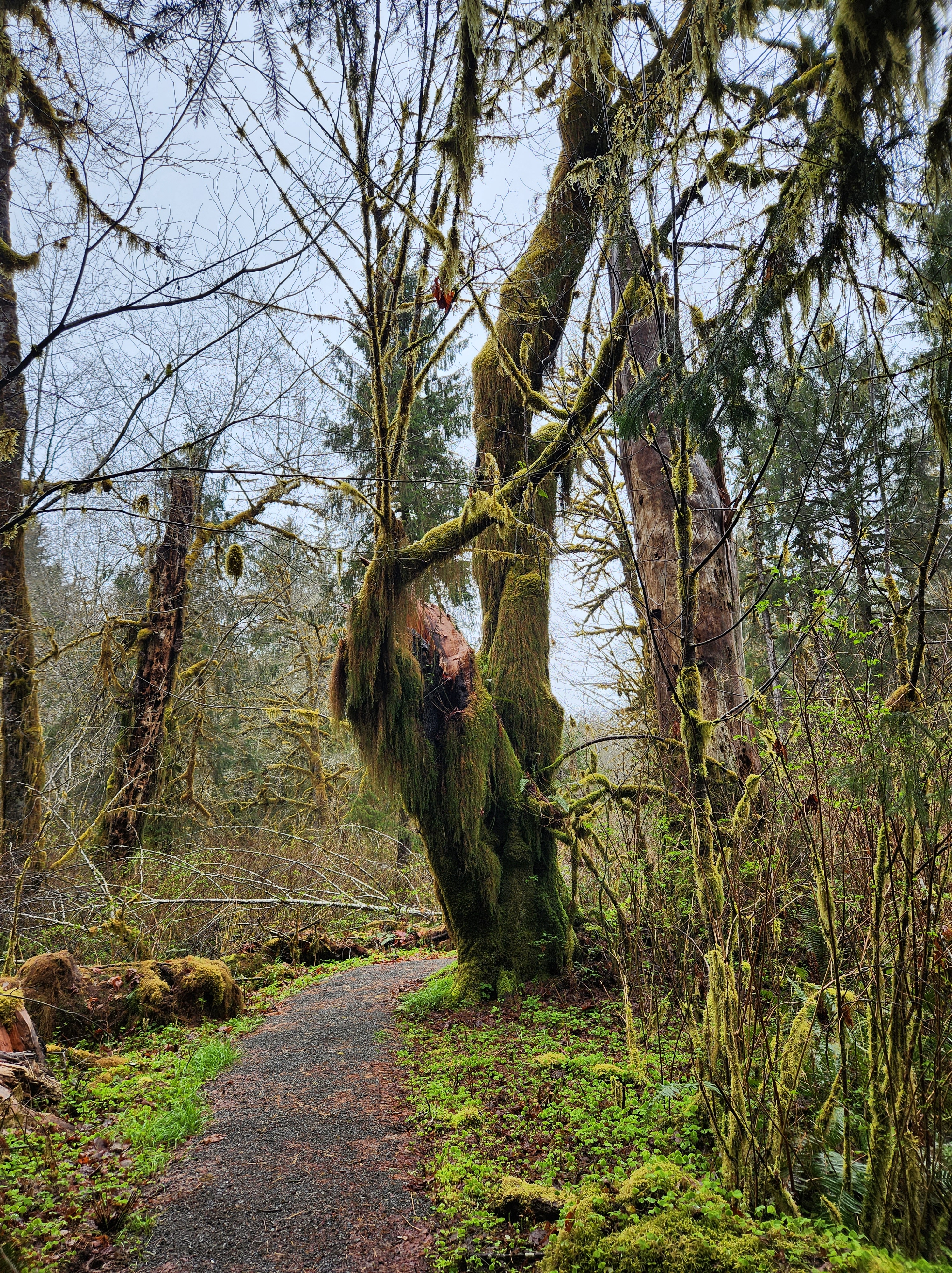

We then headed farther up North Shore Rd until we hit the the spot where it loops back to South Shore Rd at a bridge crossing over the North Fork Quinault River. The bridge crossing was barred, and so we turned ourselves around and began the trek back.
The road was riddled with massive potholes, but we took our time and enjoyed the views. We weren’t lucky enough to spot any elk, but saw some deer, a vulture feasting on a carcass, many more forest spirits, birds and a few “moss crossings”.
On our way back we stopped at the July Creek Picnic rest area, which had clean bathrooms, a small waterfall and a short pleasant hike.
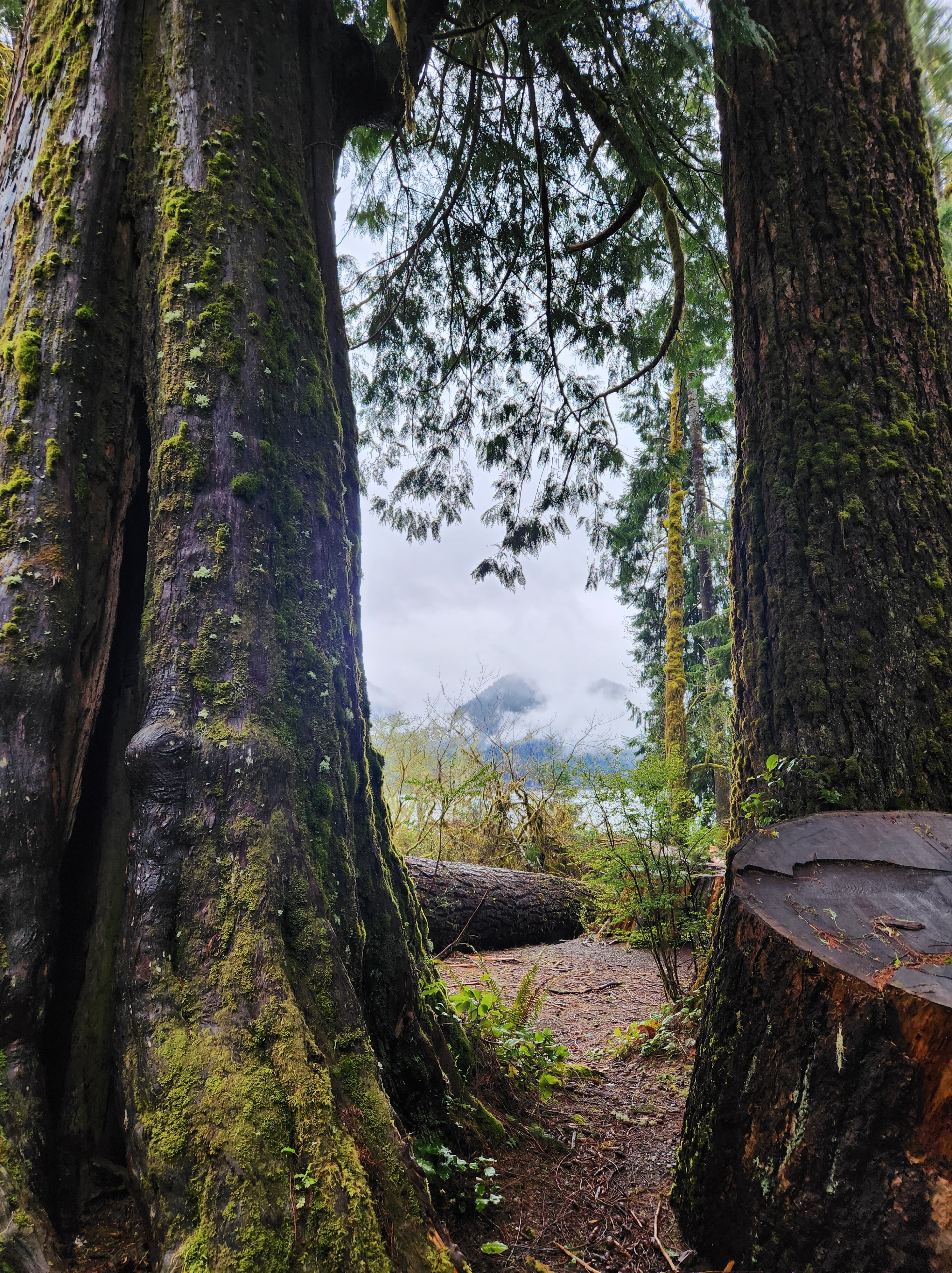
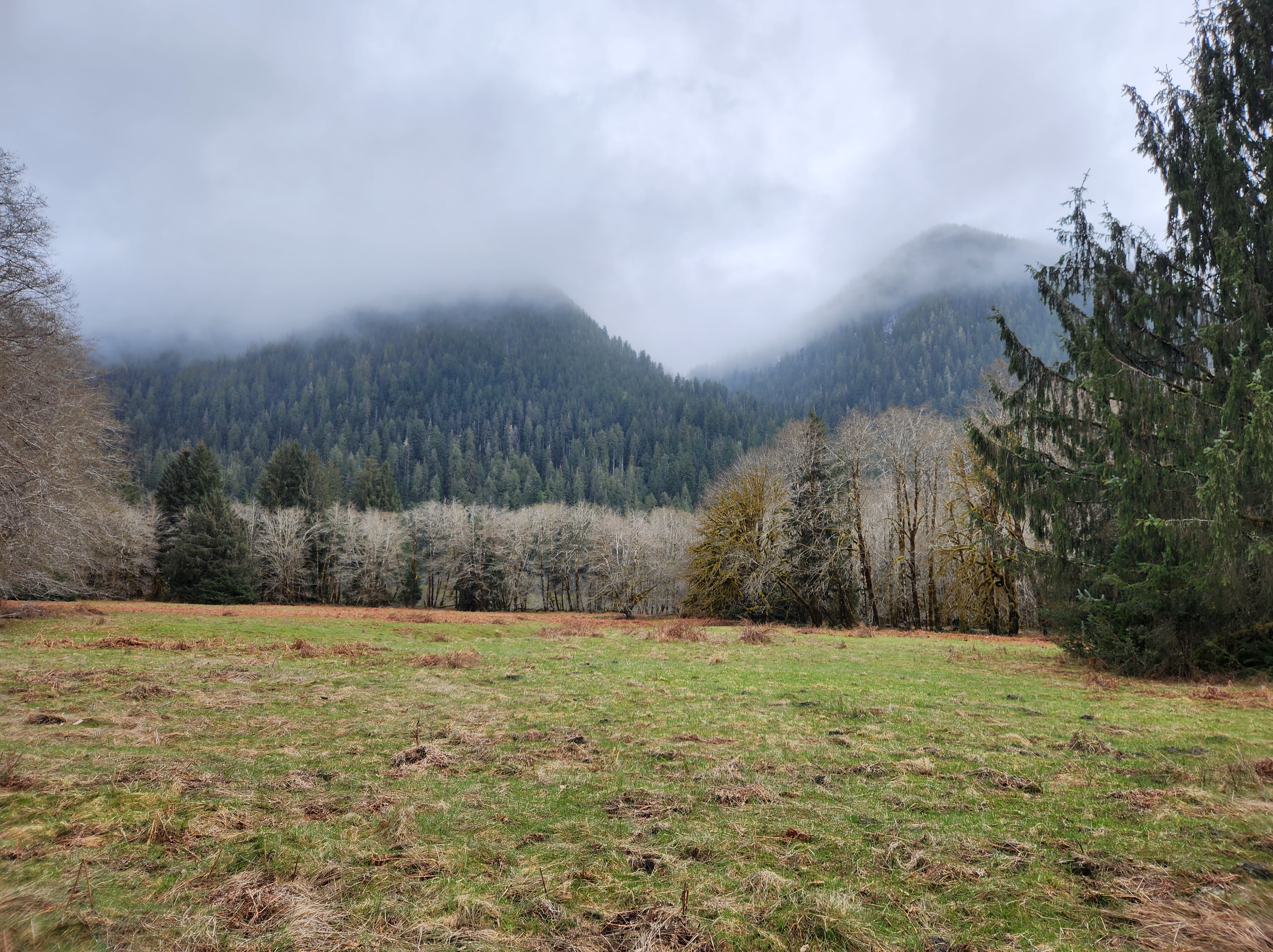
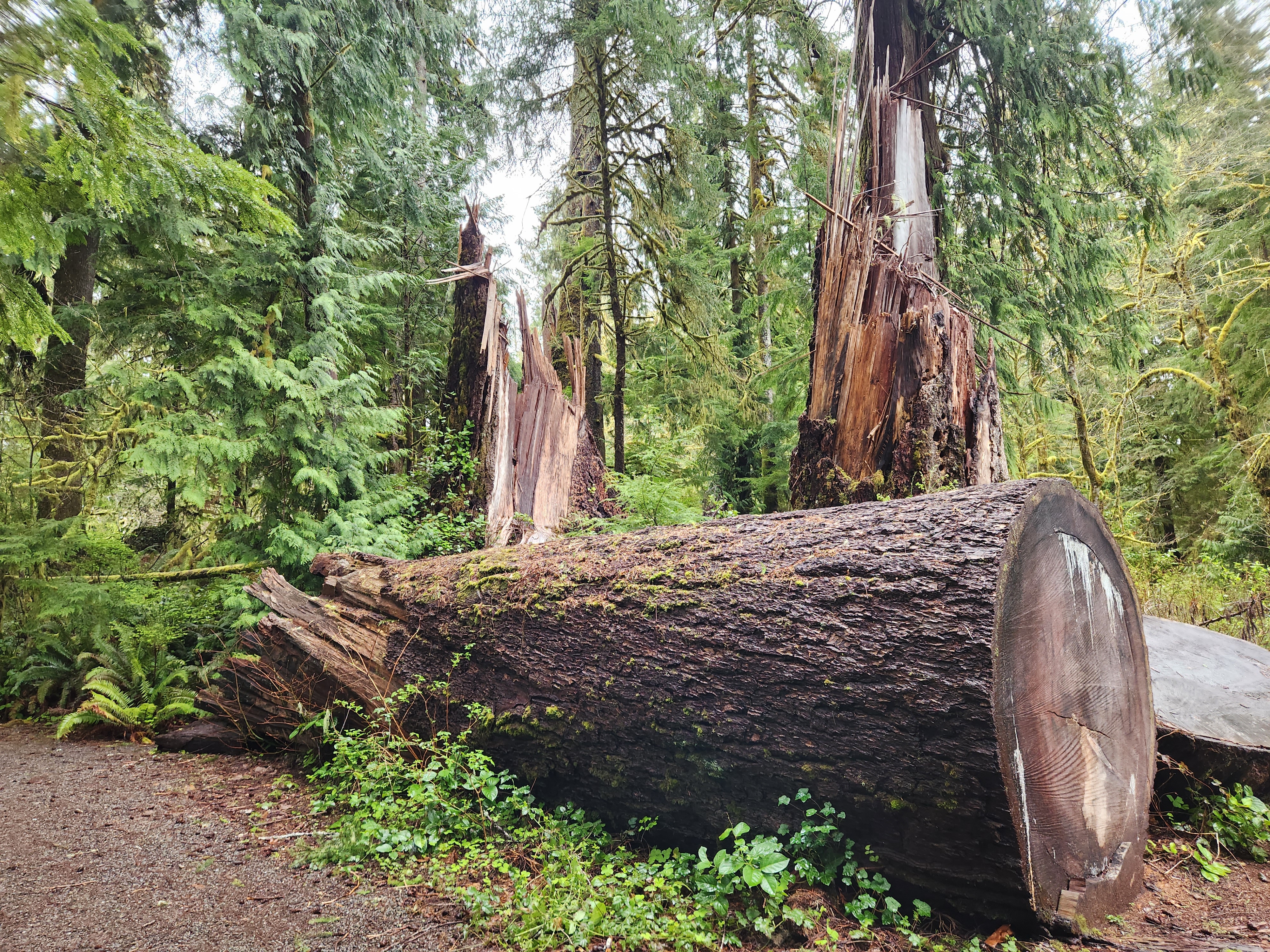
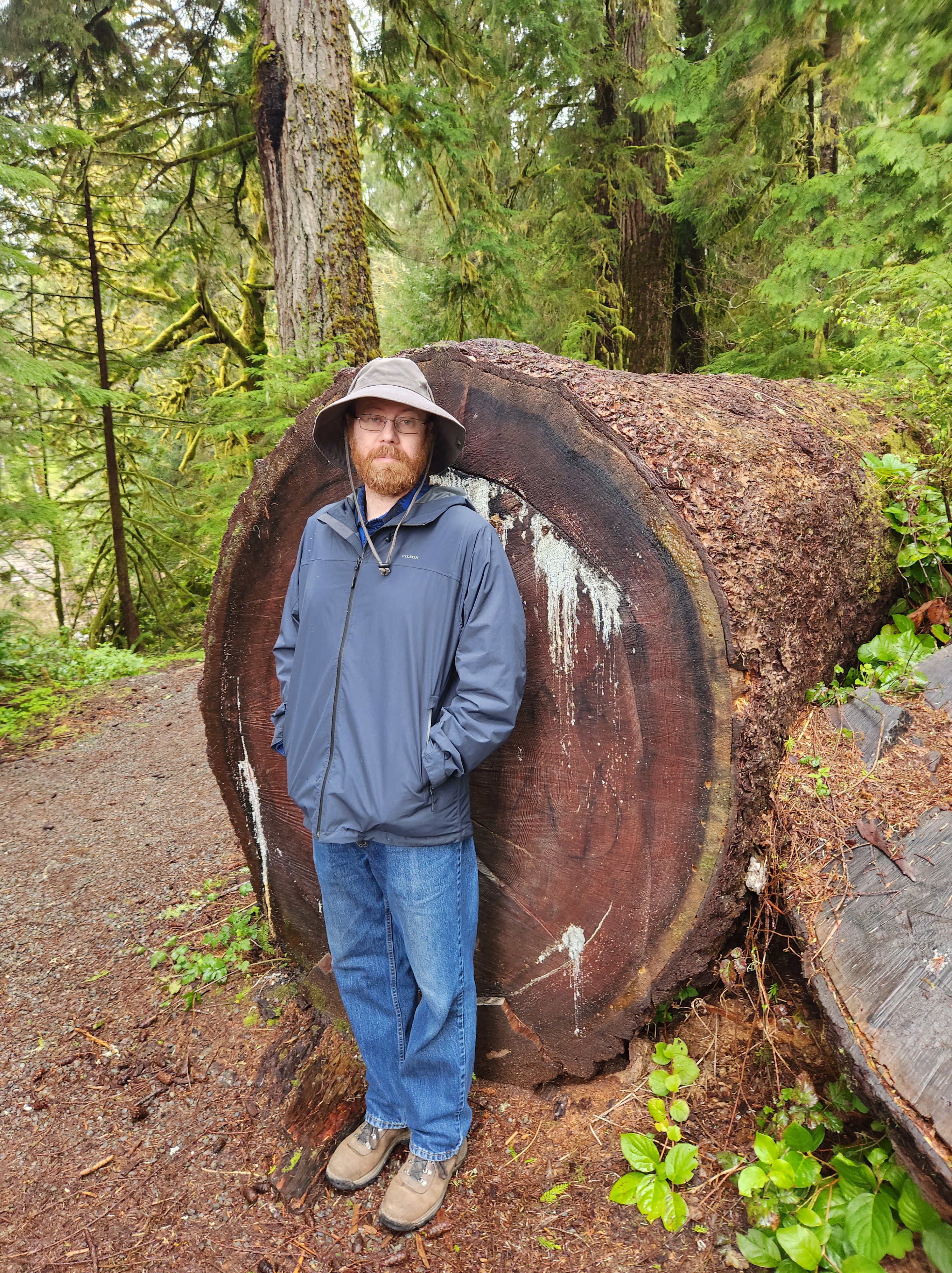
Once back on South Shore Rd, we stopped at Merriman Falls. Merriman Falls is an excellent stop for folks with limited mobility. You can see the falls from the road, without even leaving your car, or sidle down the small hill to get up close to the rushing water.
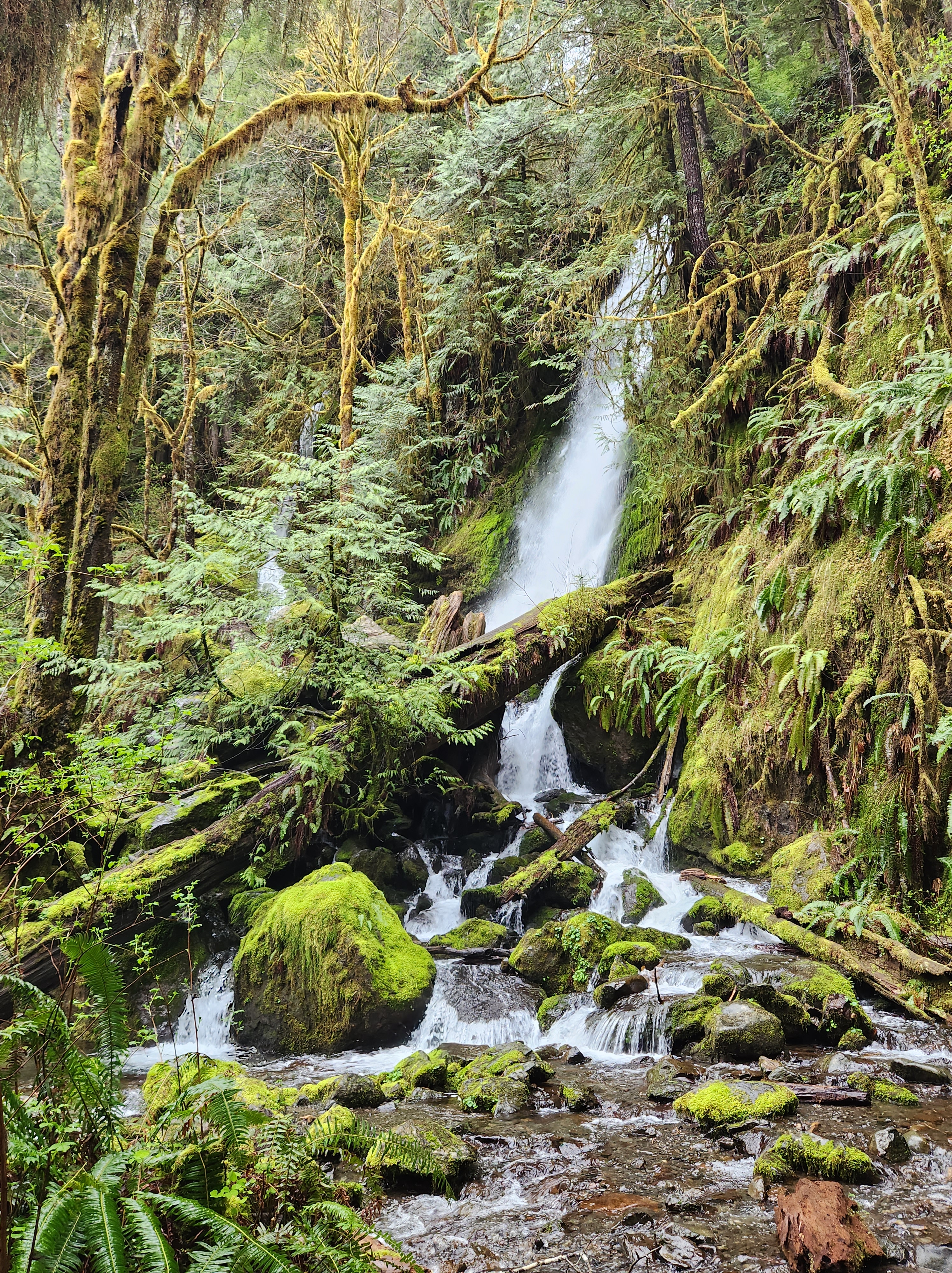
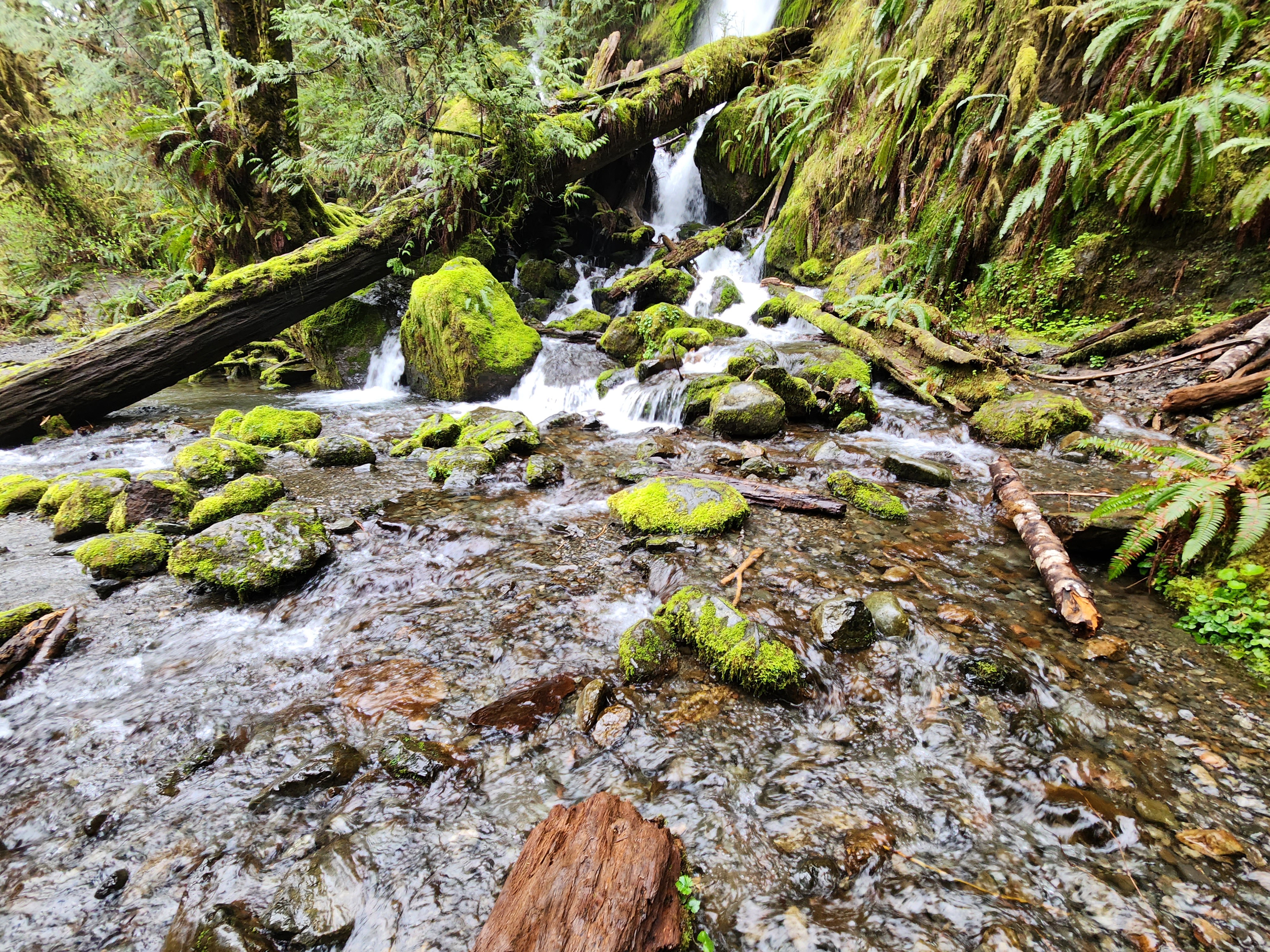
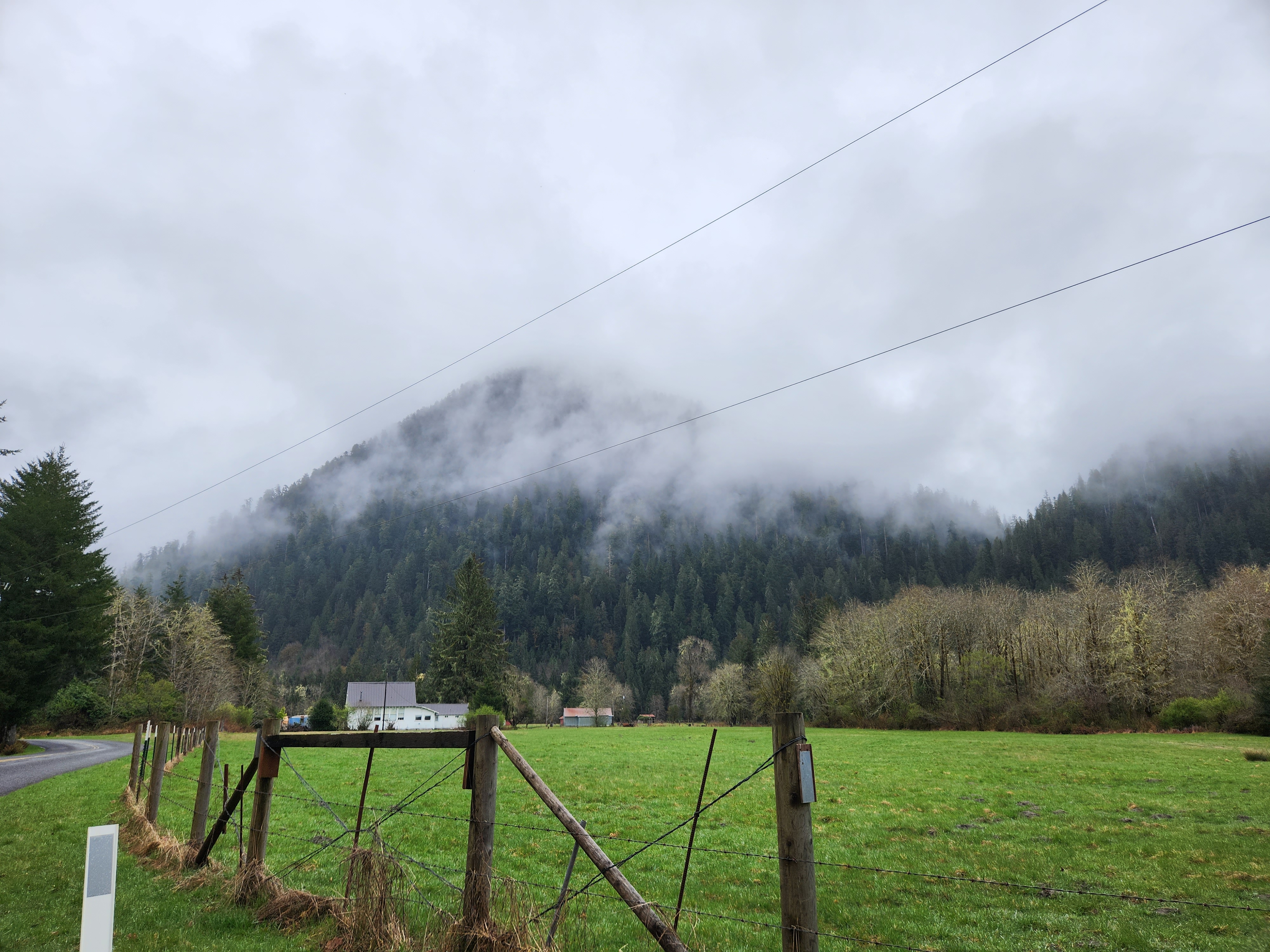
On the third and final day of our trip we headed West to the coast, before meandering North and heading home. I had hoped to catch a negative low tide to do some tide pool viewing, but the timing wasn’t right.
We first stopped off at Kalaloch to see the infamous Tree of Life. There is evidence that it is sinking, so sadly, it may not be with us much longer. Please don’t climb on the tree. That may not prevent it’s eminent demise, but it surely can’t be helping it either. We viewed the tree respectfully from the ground and took a long windy walk on the wide beach.
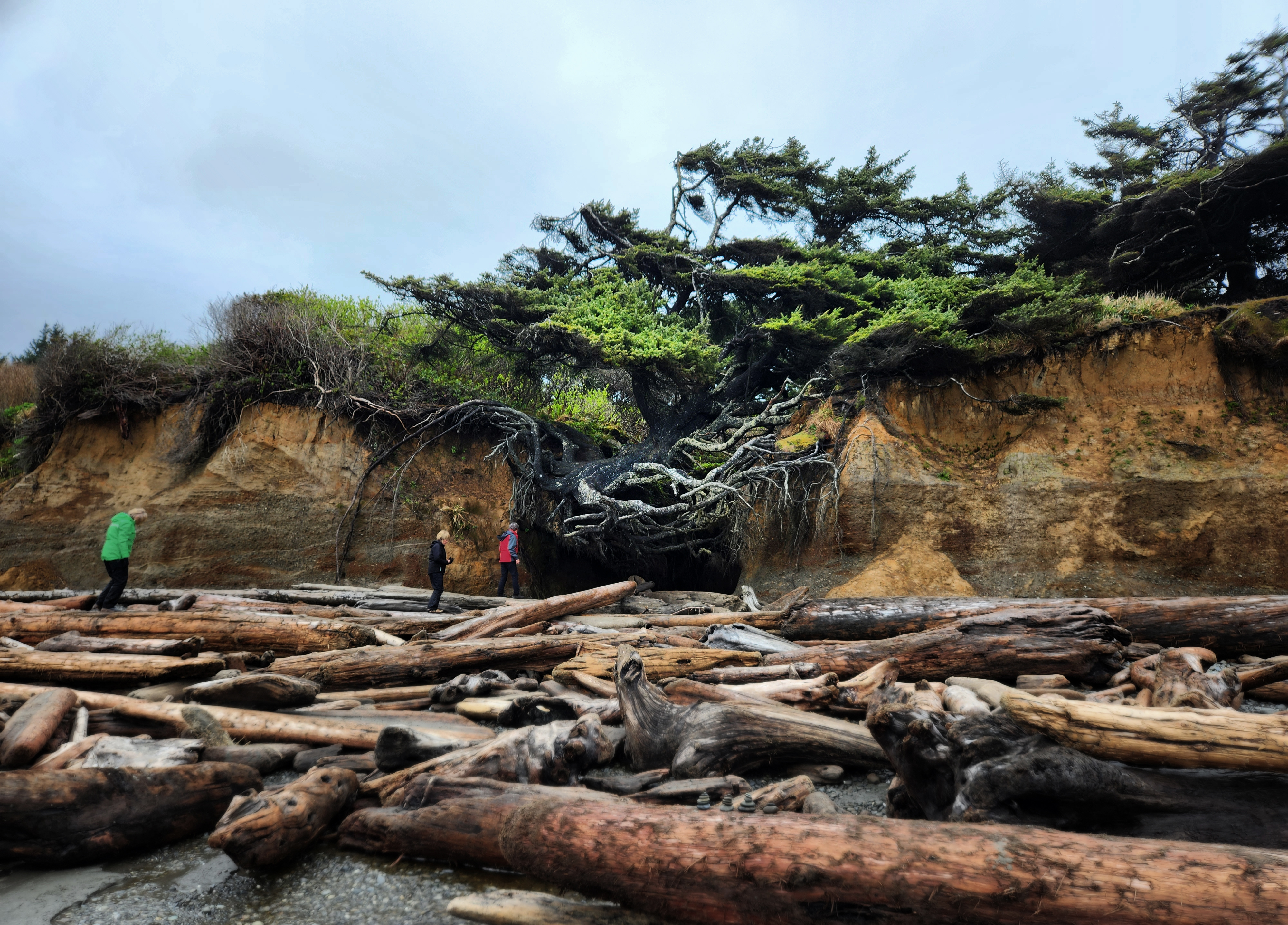
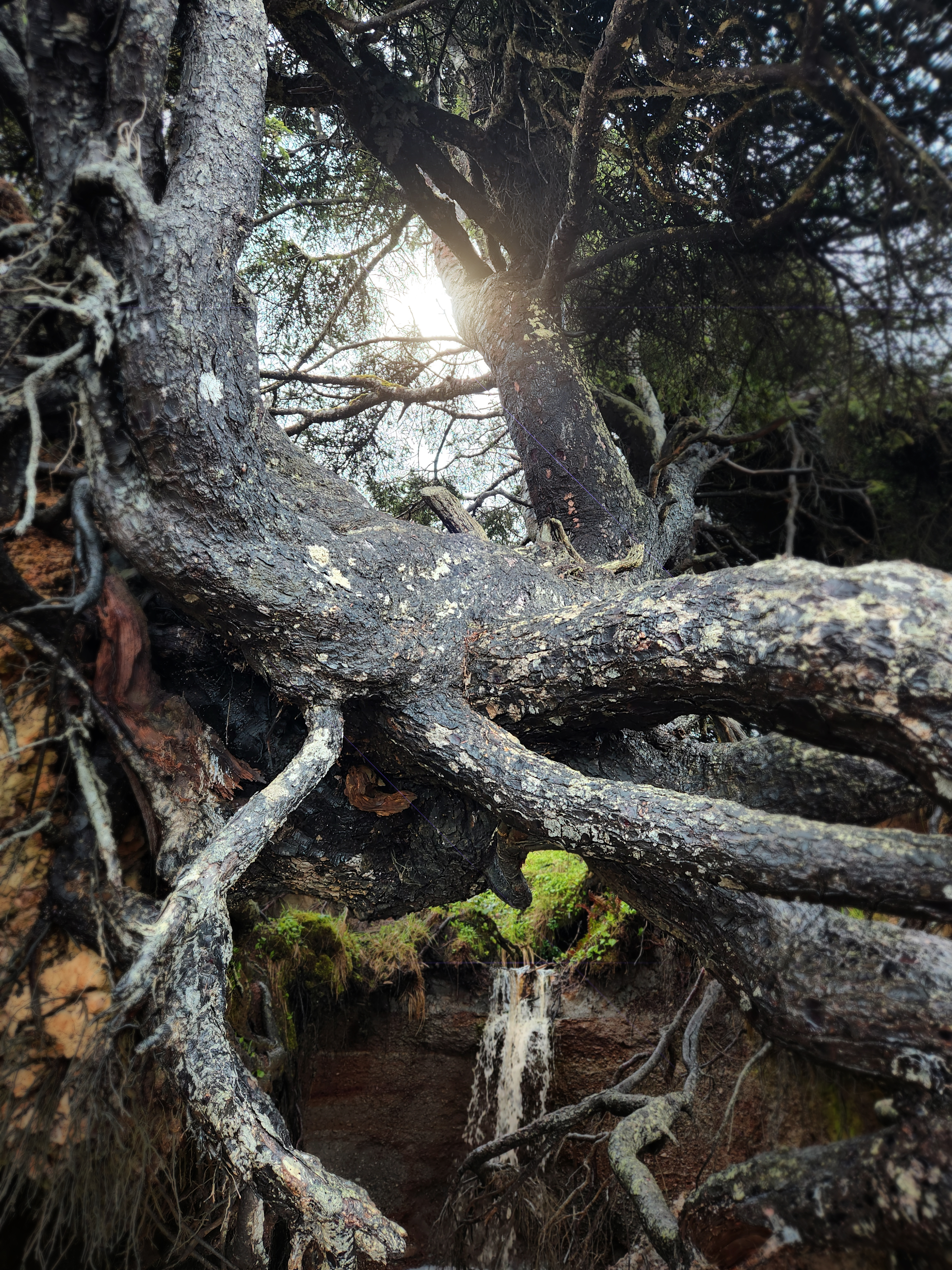


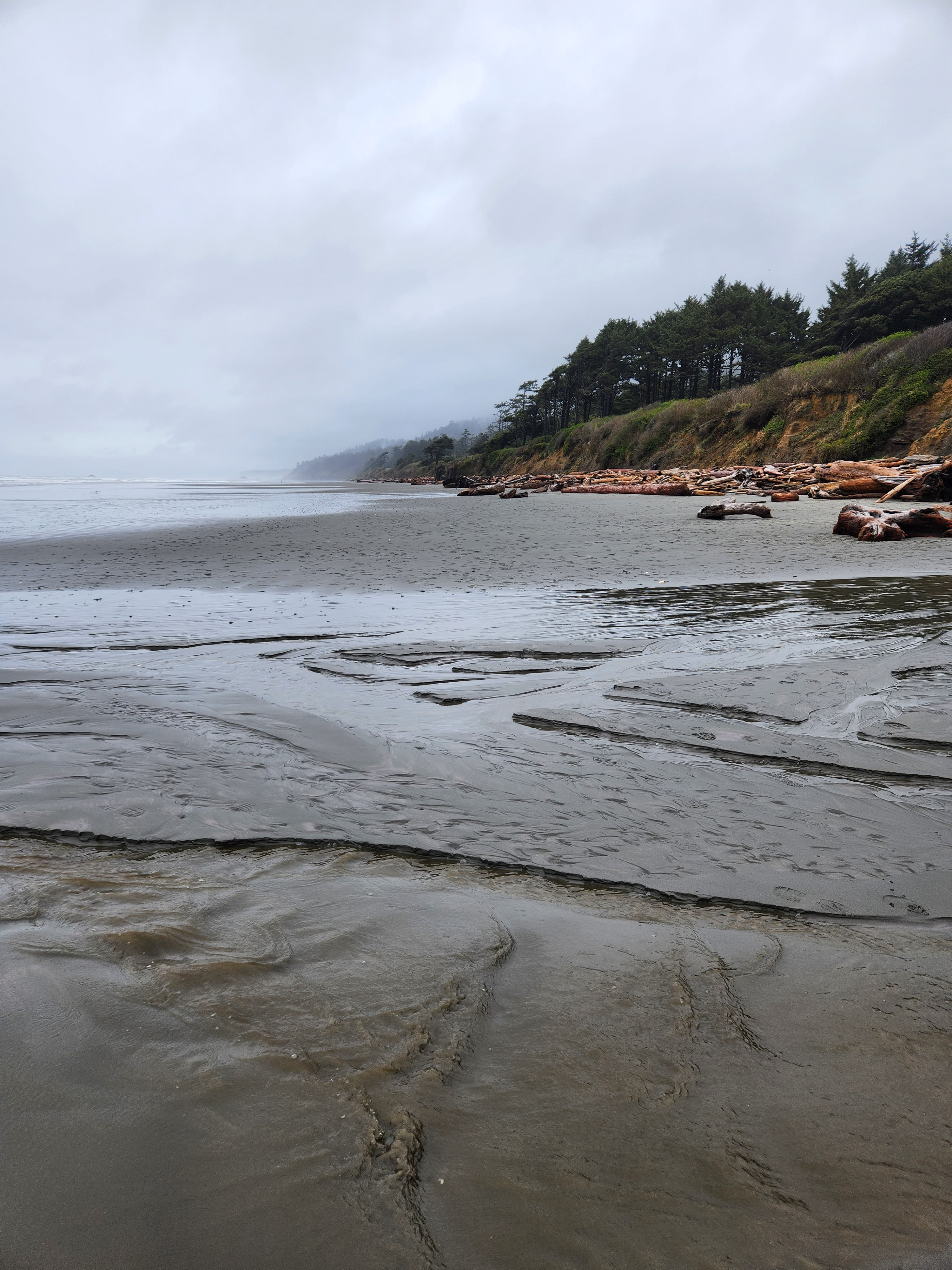
I had no idea what to expect from any of the beaches and could only rely on the info found online. I knew that Kalaloch and Ruby Beach were popular destinations, but there were also these rarely mentioned beaches with humble names: Beach 1, Beach 2, Beach 3…
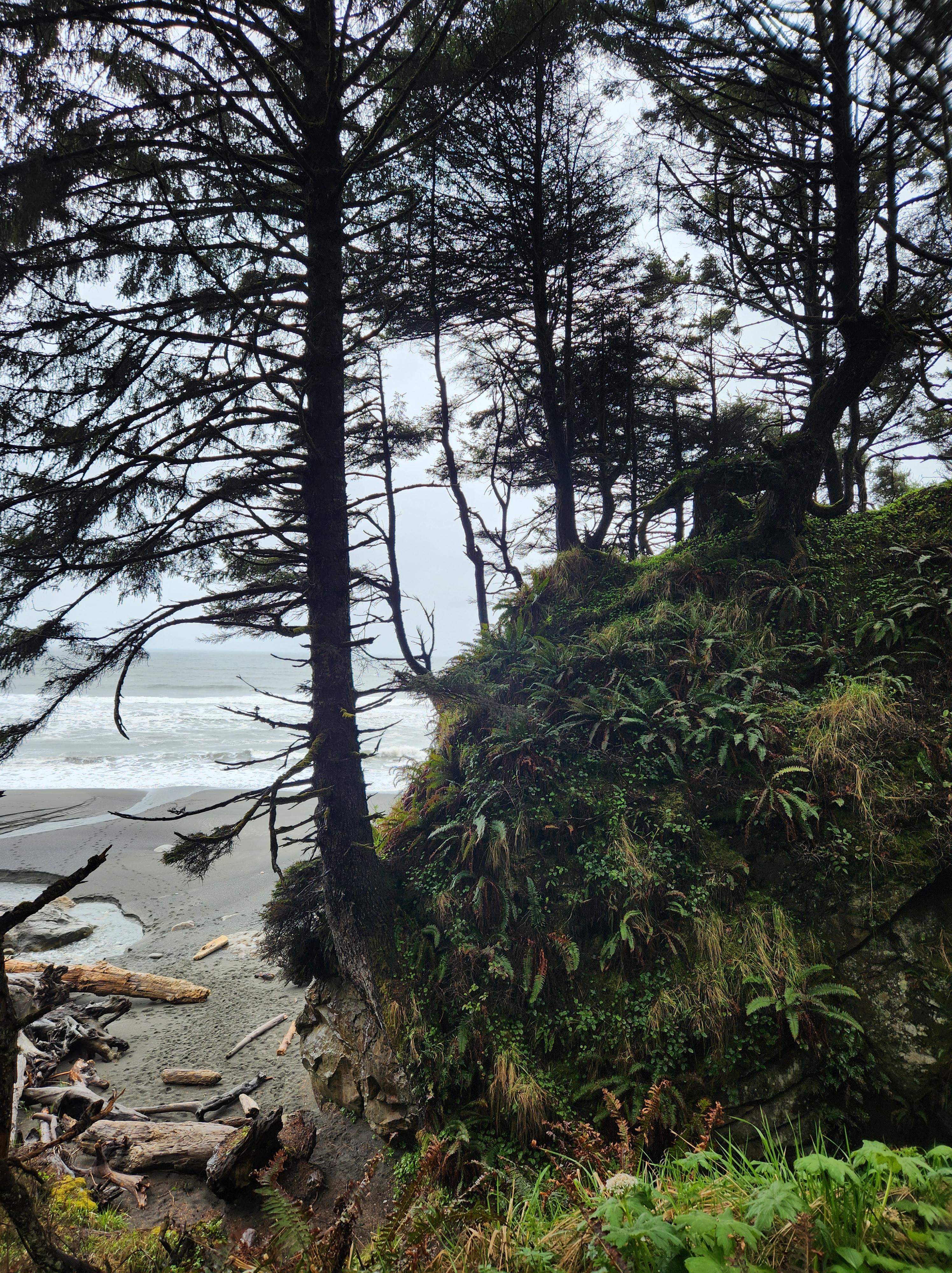
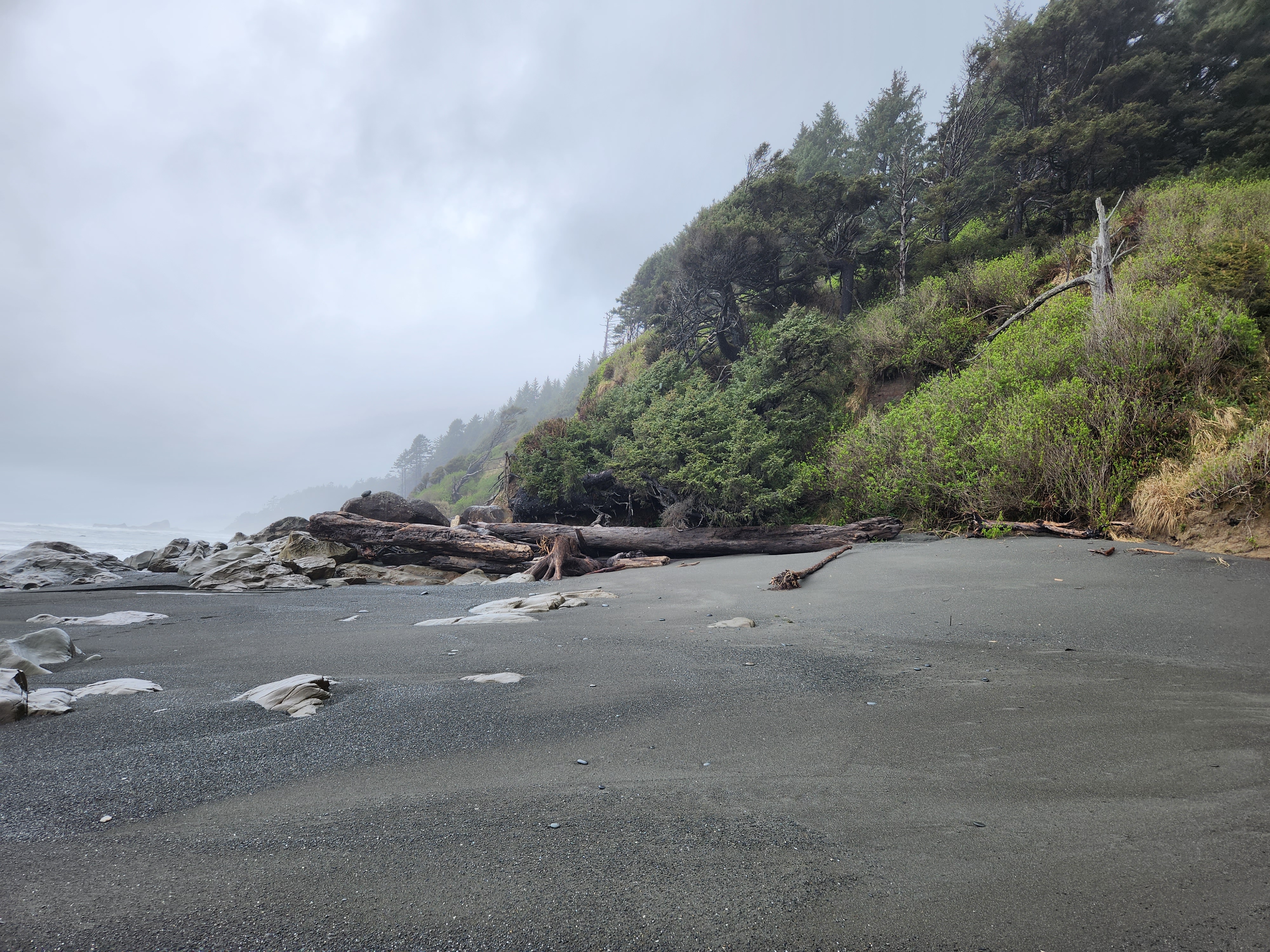
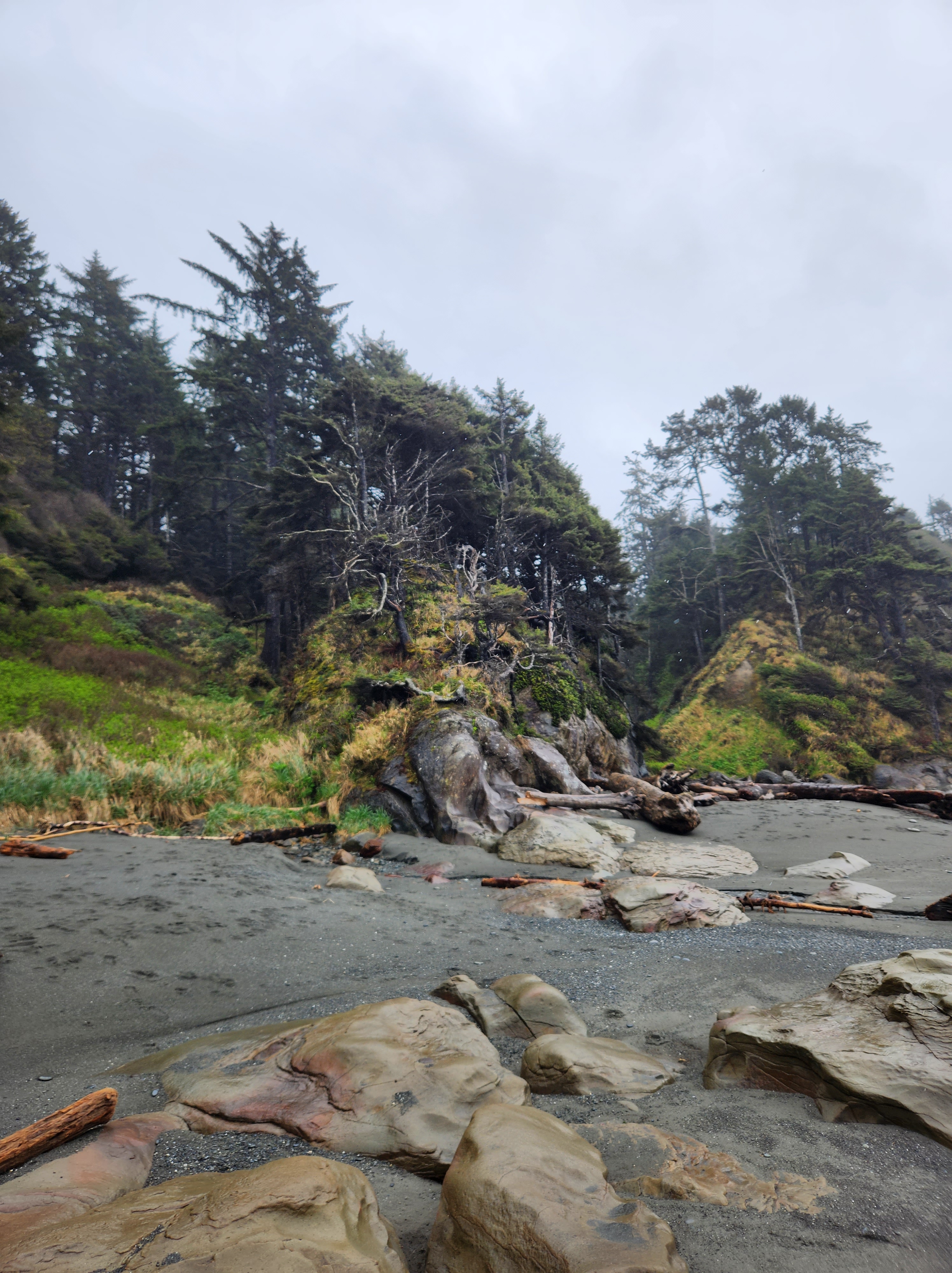
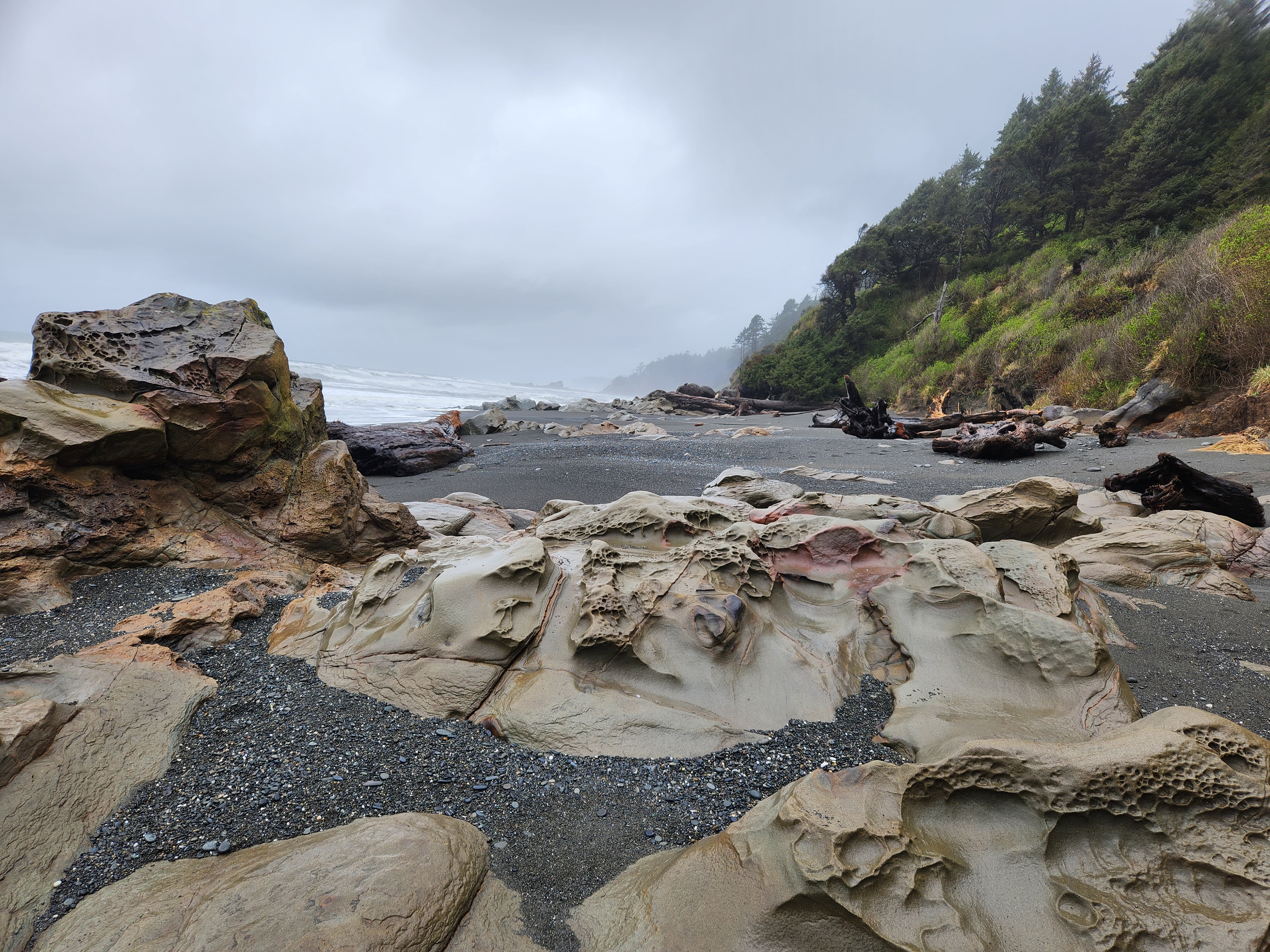
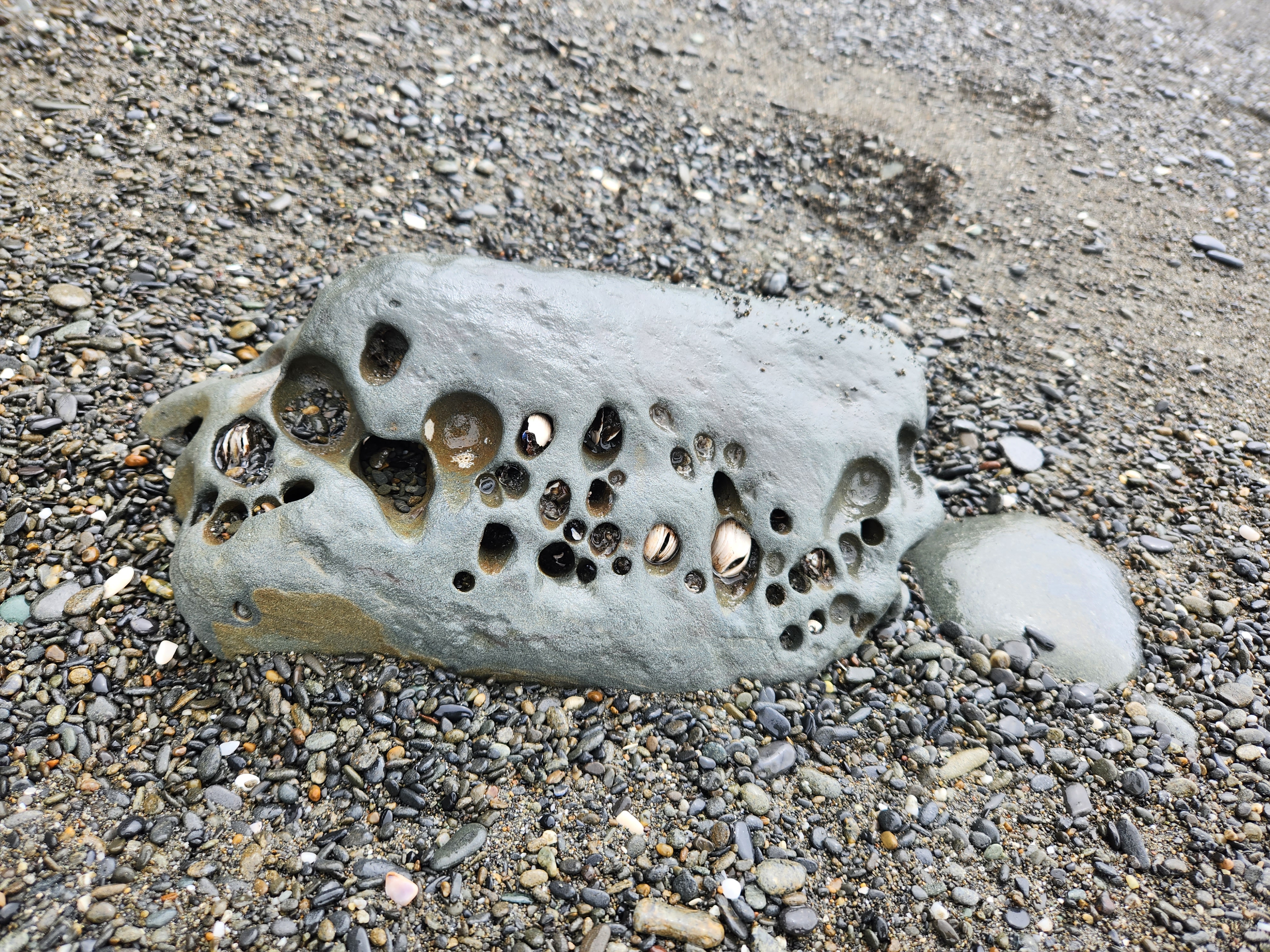
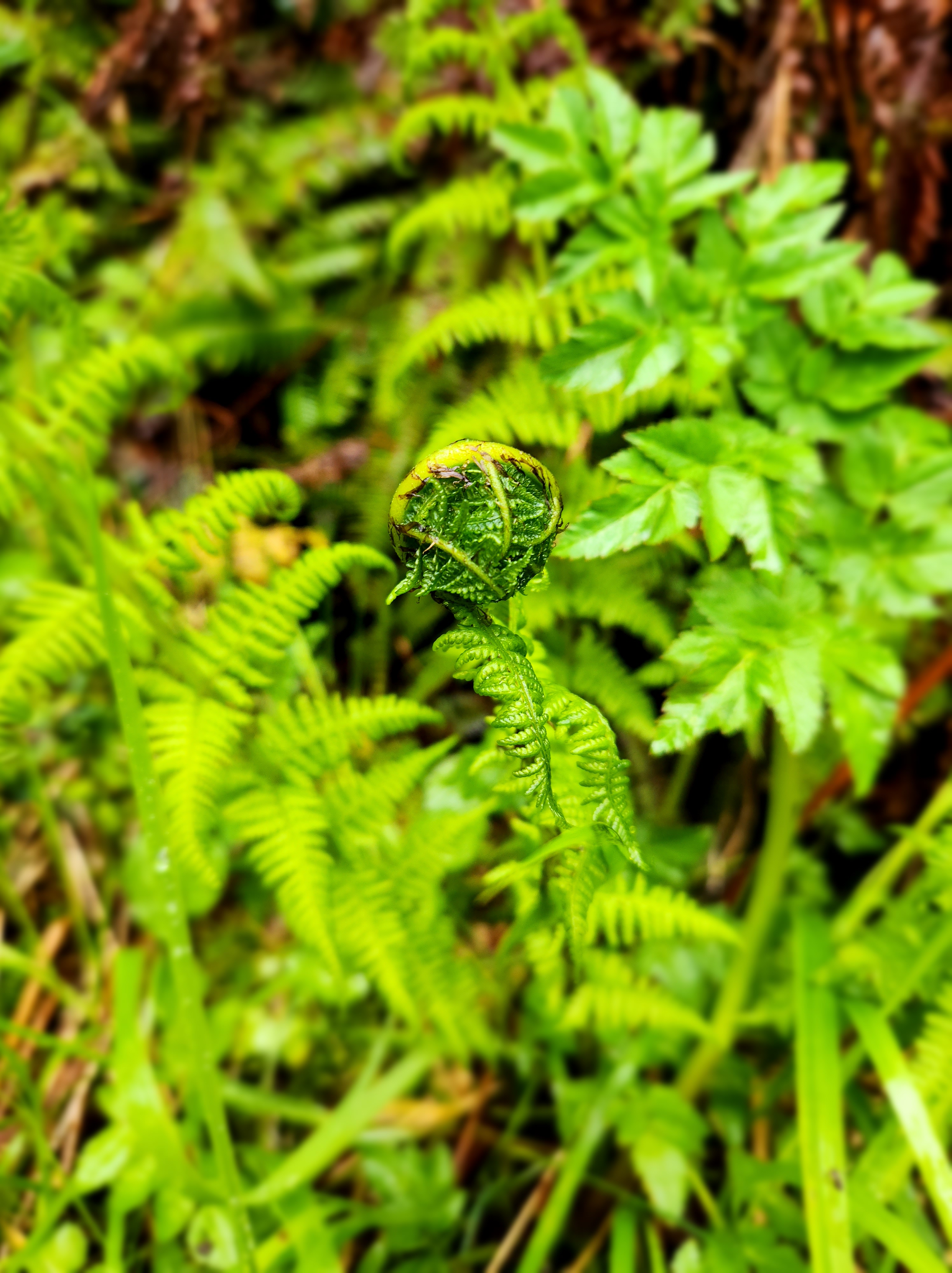
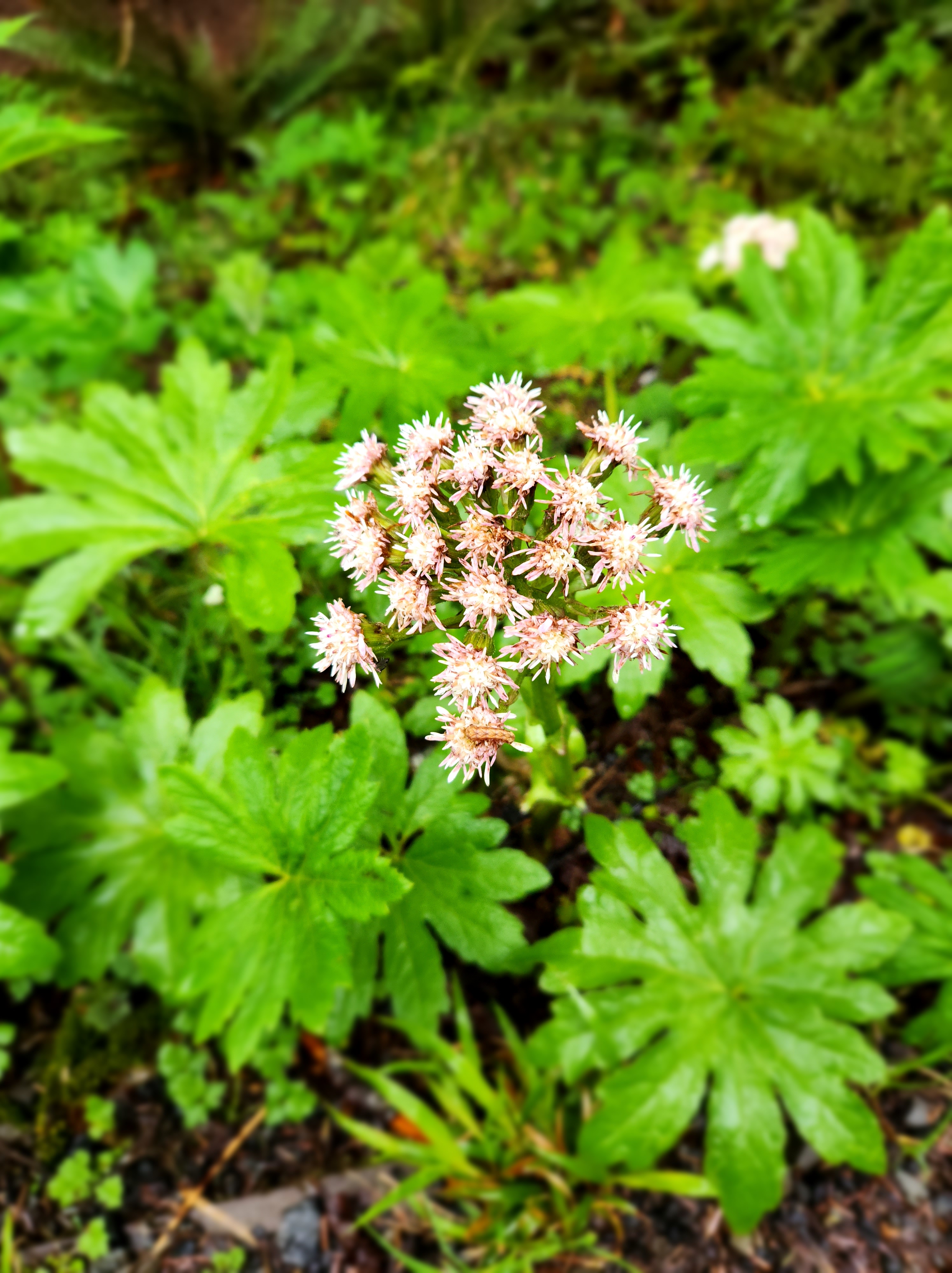
I chose Beach 3 as our next destination and I couldn’t tell you why. I’m glad I did. We had the beach entirely to ourselves and while I didn’t find any exposed tide pools, I did discover a bit of magic.
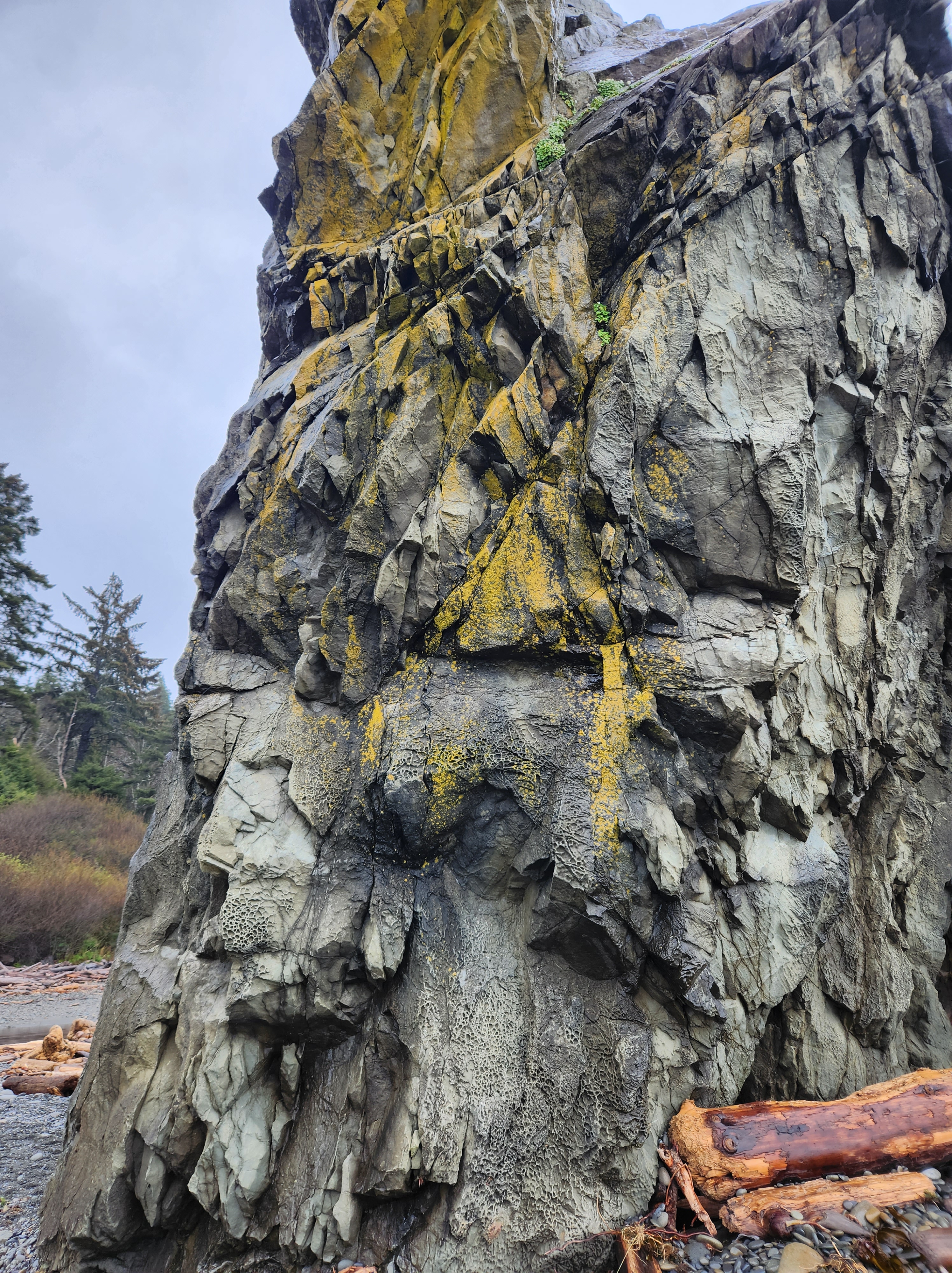
A large slumbering beast guards the stairs down to the beach.
Sea creatures carve holes into stone, leaving their footprints behind for us to tell their stories.
It’s a beautiful spot and I found it very inspiring.
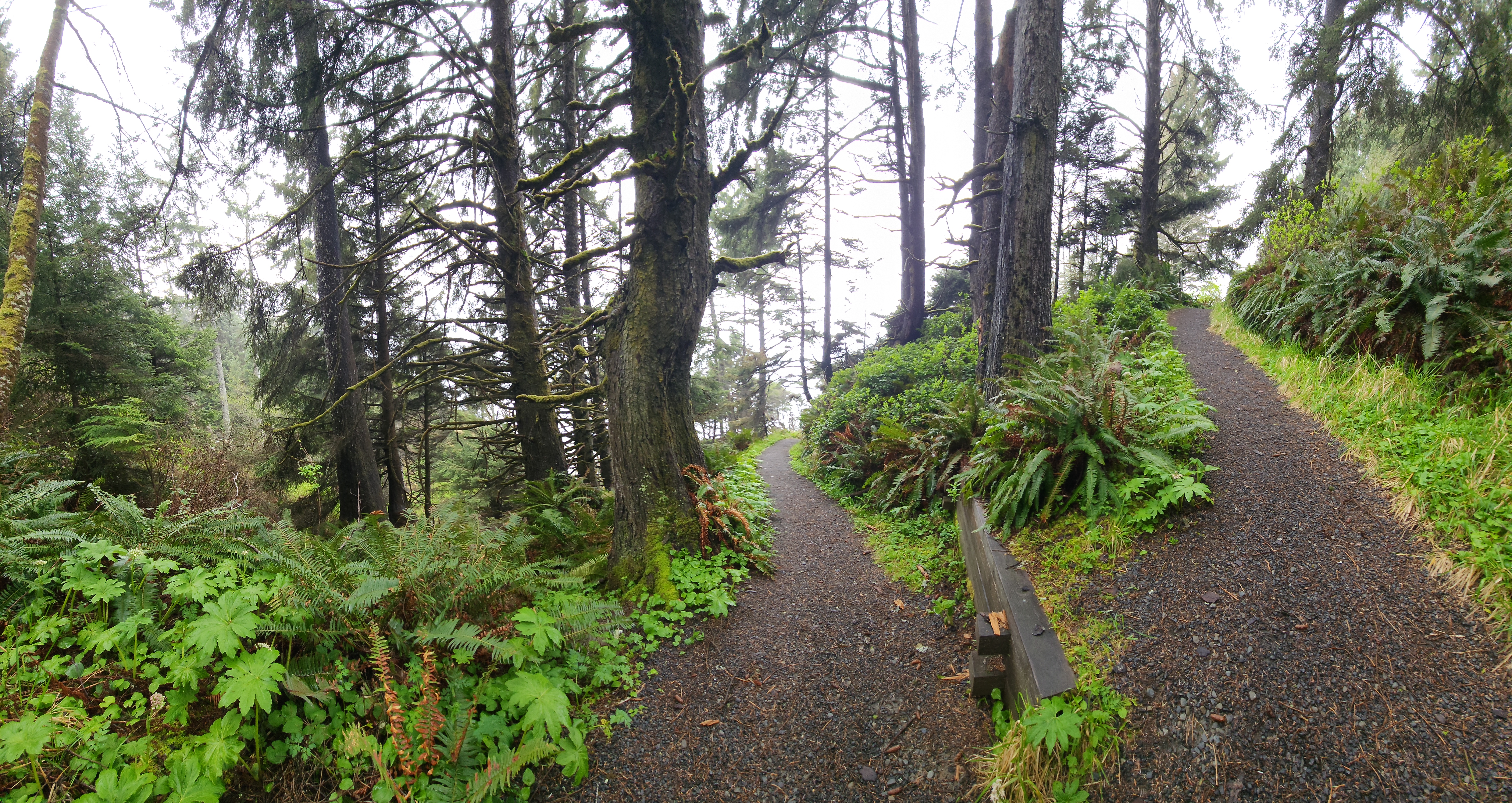
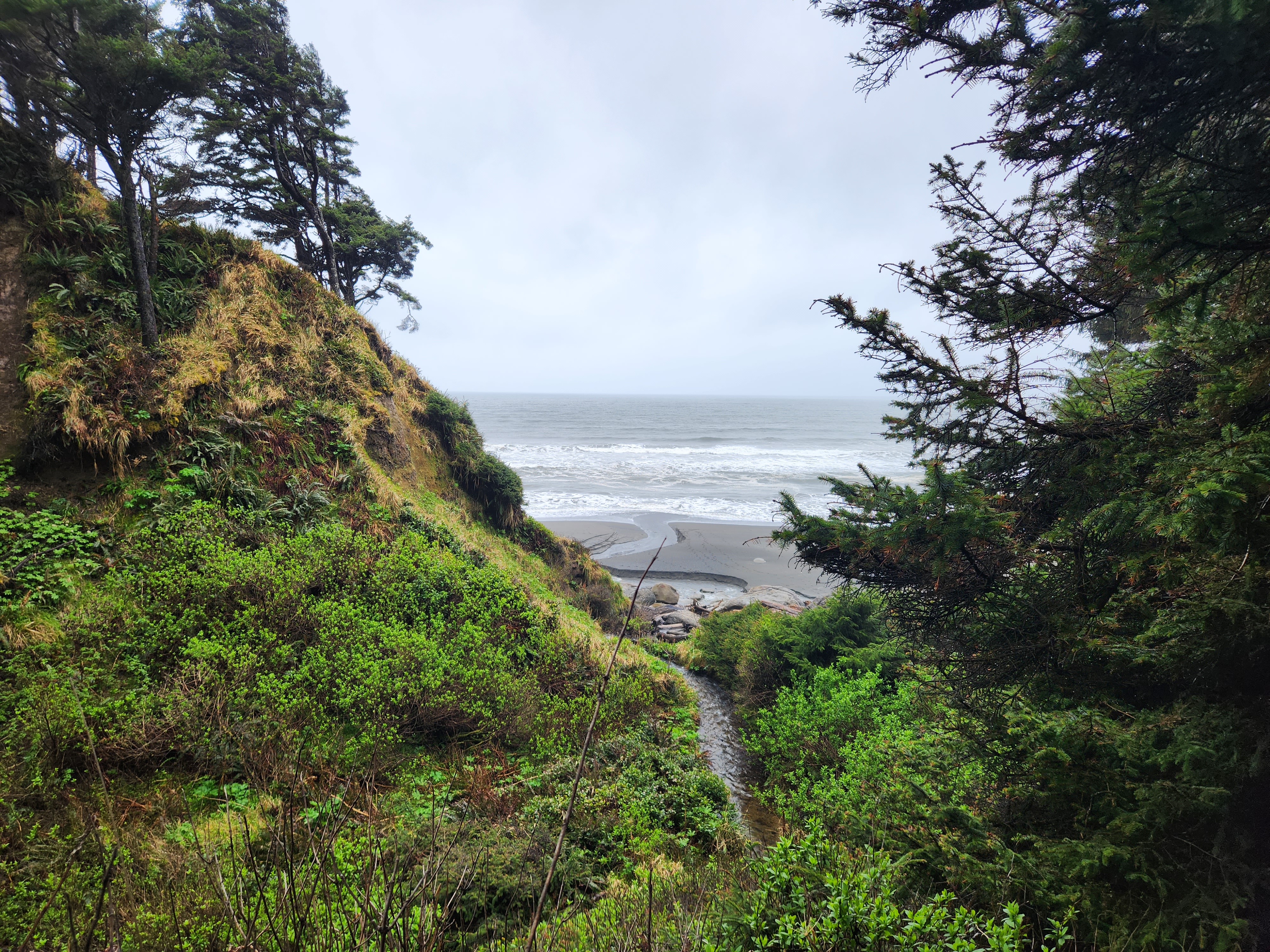
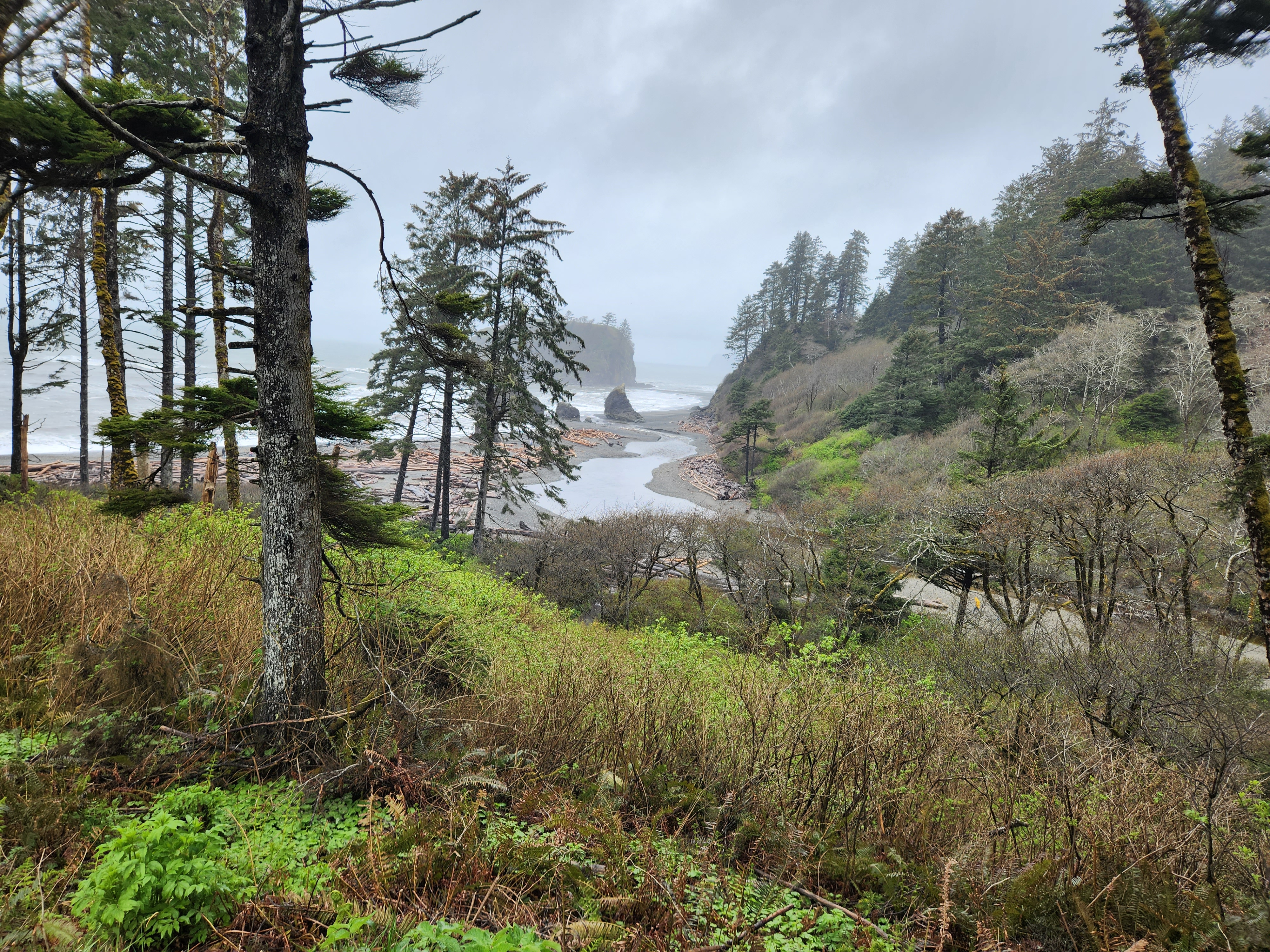
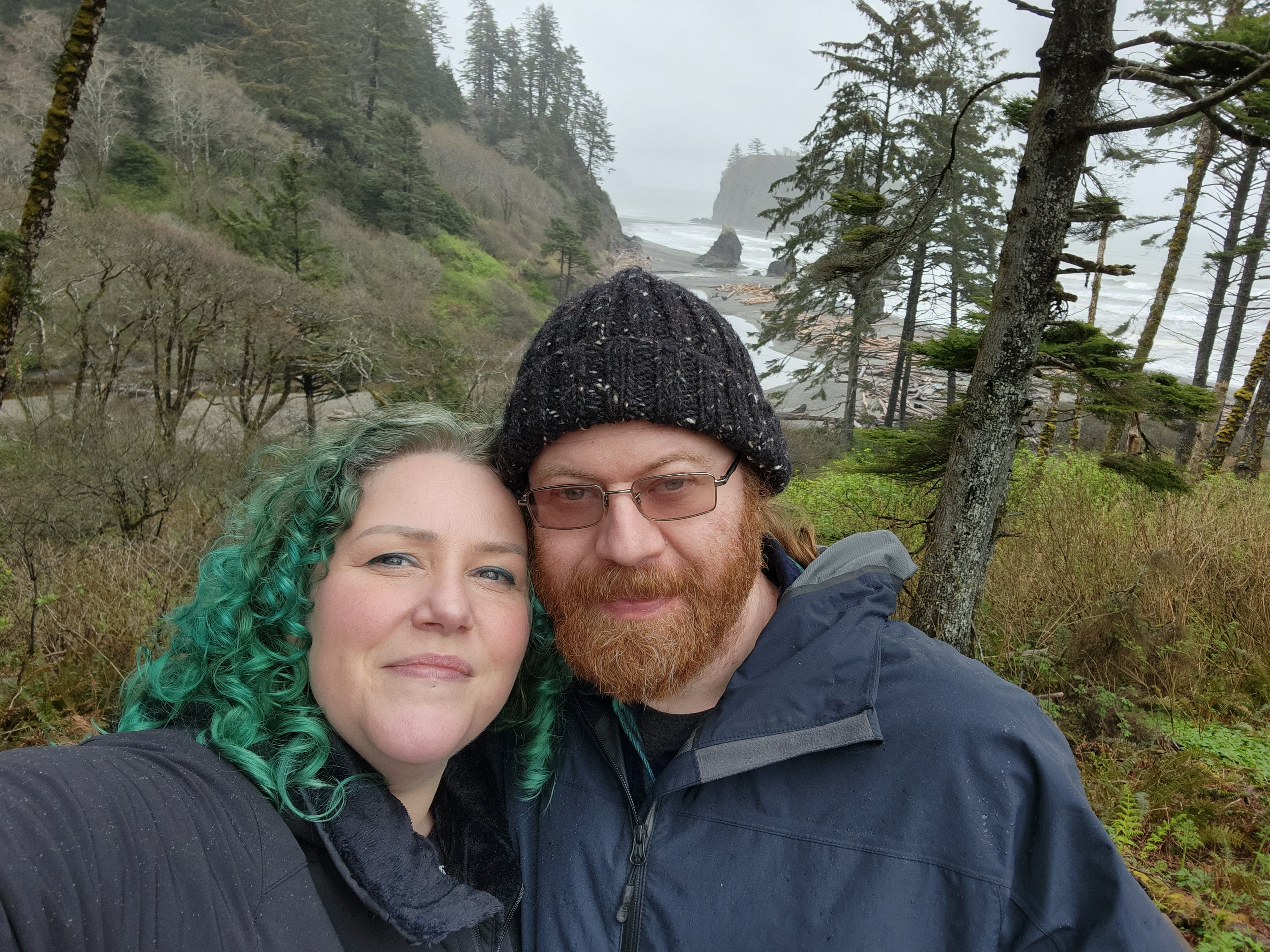
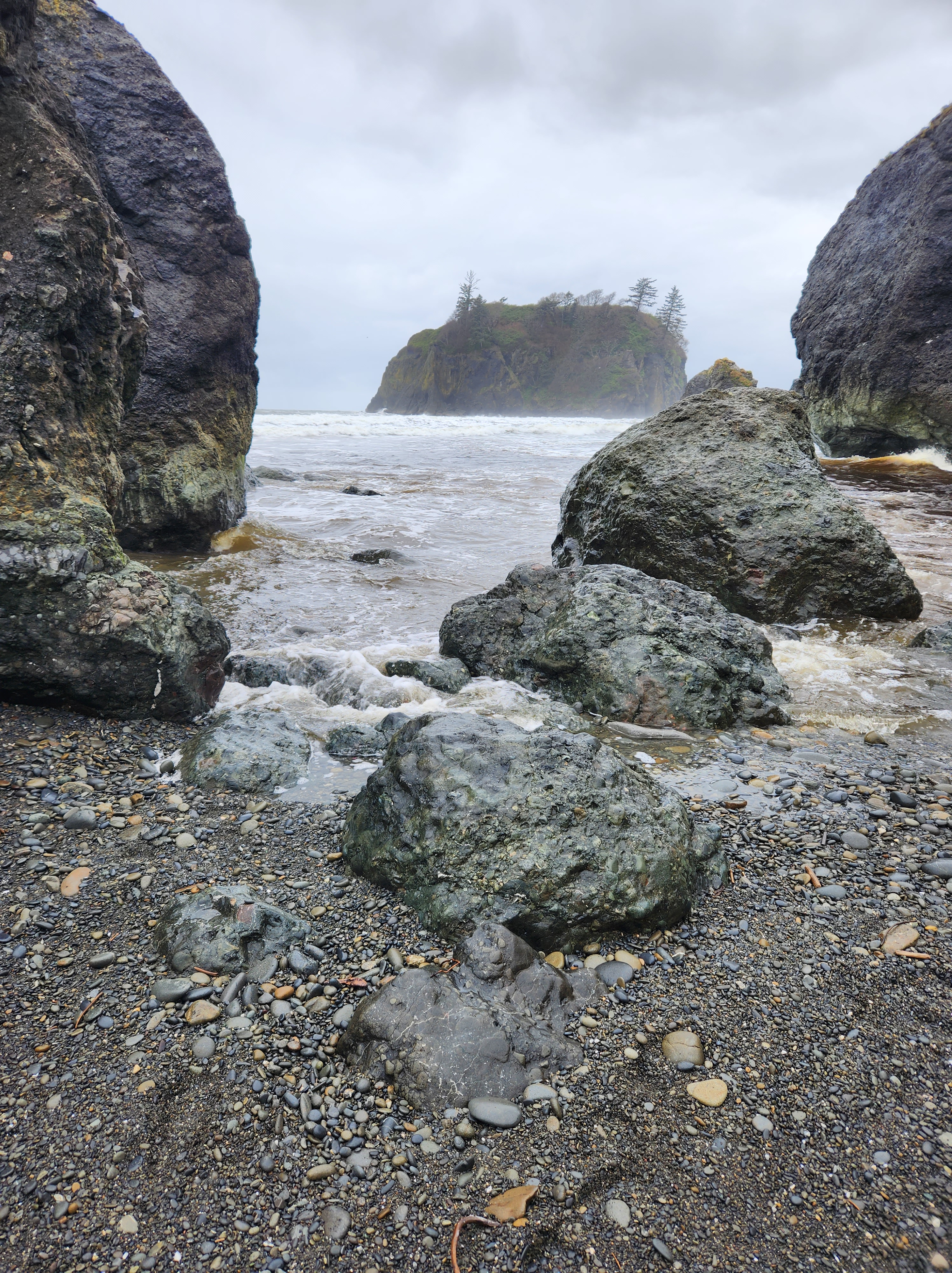
Our final stop along the coast was Ruby Beach. It was crowded, even at that early time in the season. There was a quick rain shower that cleared out the beach, though! We were prepared for the wet in our rain gear and weren’t frightened off by a little water.
It’s a lovely beach, and the large rock formations add dynamism to the horizon. I can definitely see why this is a popular spot for photographers and would love to see it again in different weather conditions and at sunset.
For those with mobility limitations, Ruby Beach has a smooth paved parking lot, accessible bathrooms and a paved lookout point.



And that was our last stop. We went up to Port Angeles for dinner, but the restaurant we had been looking forward to eating in was unexpectedly closed, and the restaurant we ate at wasn’t worth mentioning.
The drive past Lake Crescent, while scenic and beautiful, was incredibly stressful. Drivers were bullying us and we had a really difficult time through this pass. It’s such a beautiful place. I’m at a loss for why people are in such a rush and are so angry. It really ruined it for us and we’re reluctant to go back that way next time.
I don’t want to end on a negative note, so here’s a video that I captured at the July Creek rest stop on North Shore Rd at Lake Quinault.

Please remember to be kind and leave no trace.
Land Acknowledgement
No discussion of the Olympic Peninsula should be had without acknowledging that is is occupied territory.
The Olympic Peninsula is the traditional territory of the Chemakum (Aqokúlo or Čə́məq̓əm) and S’Klallam (Nəxʷsƛ̕áy̕əm̕).
We acknowledge that Indigenous people have been here since time immemorial and that this land will continue to hold deep significance for present and future generations of local Native communities.
 Leaping Rabbit